IL License Number: 104.017181

The Cold Truth: Why Ice Dams Form on Roofs (And Why Gutters Aren’t to Blame)

Understanding the building science behind winter’s most destructive roofing problem.

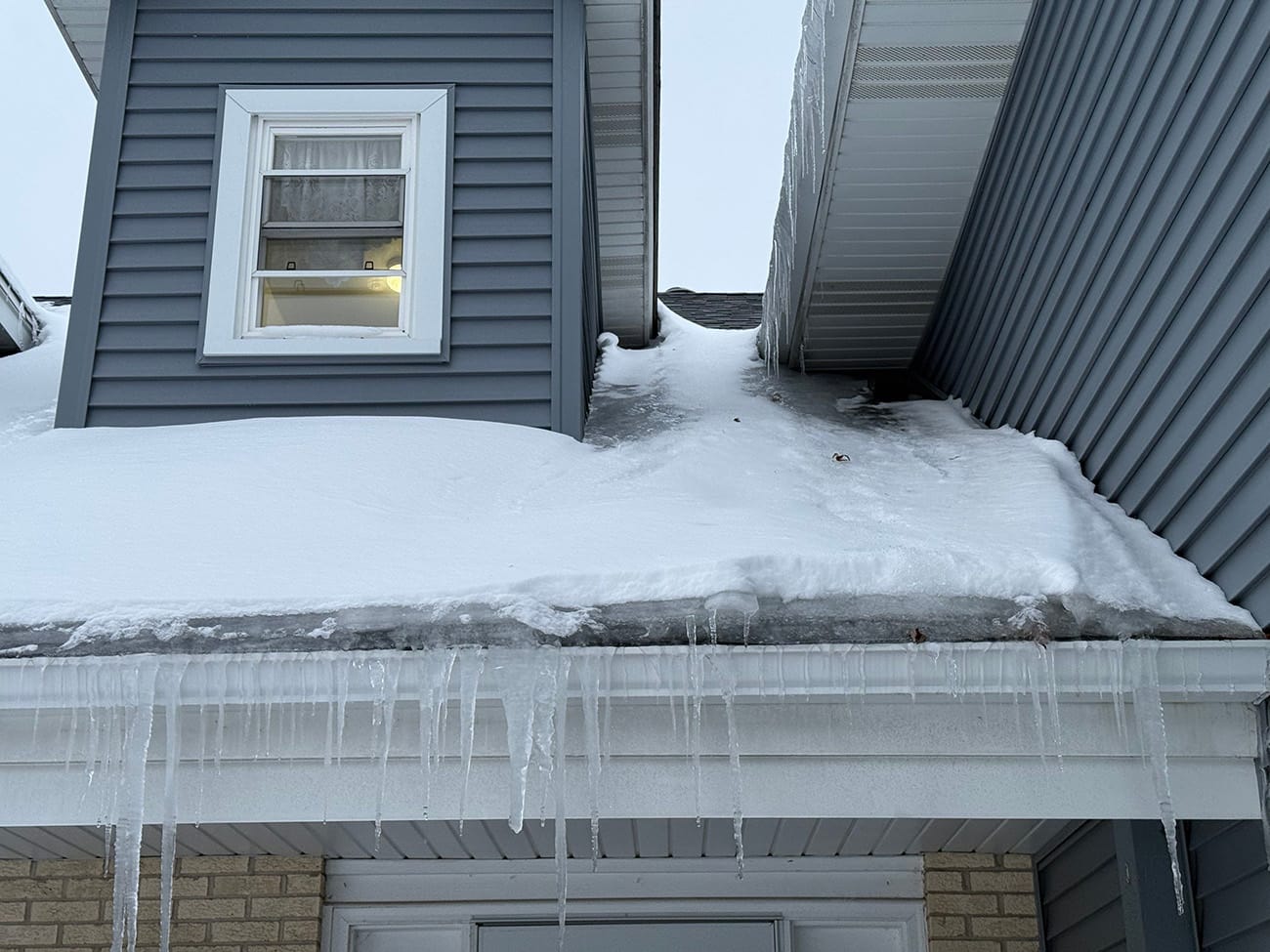
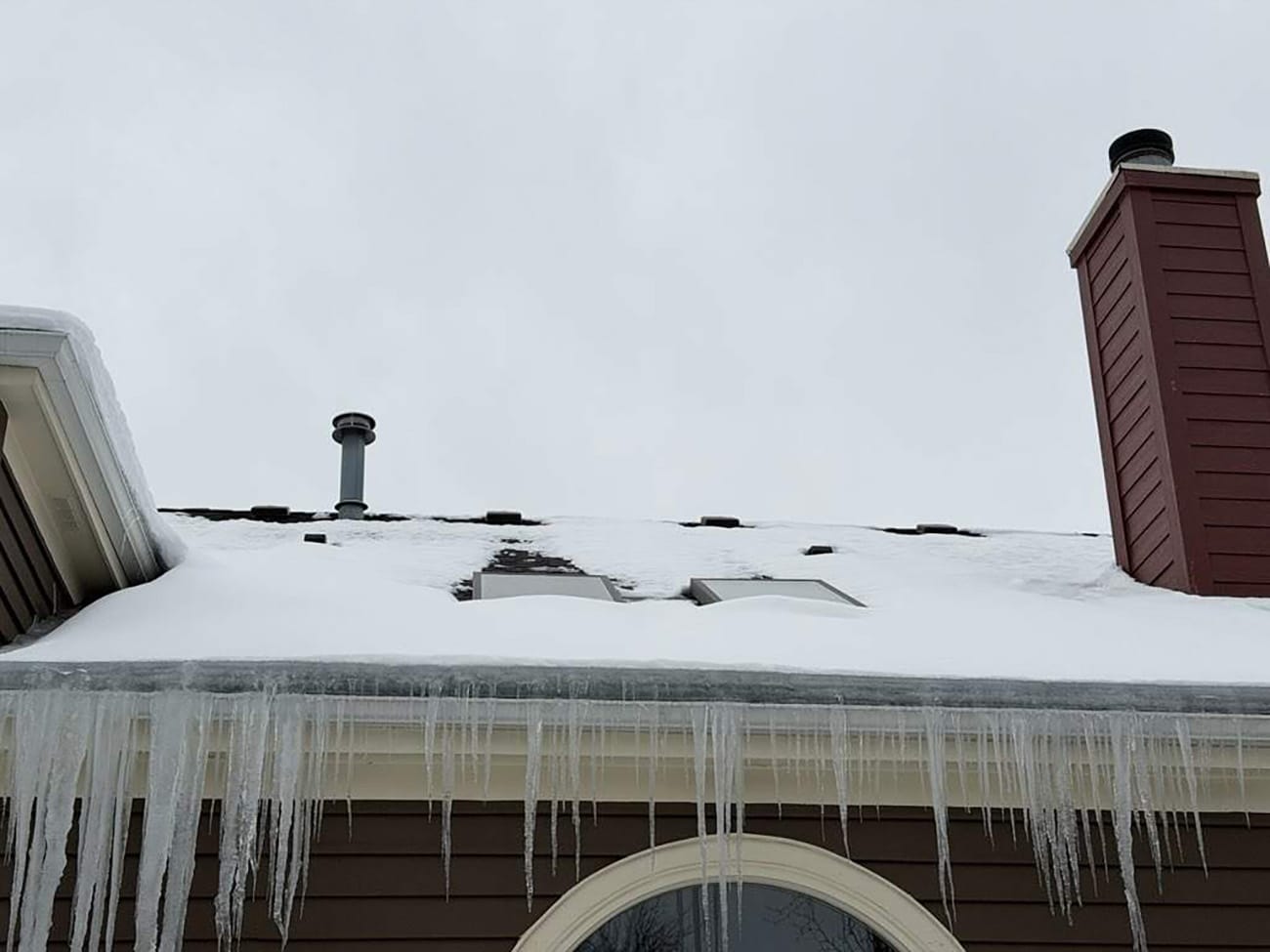
Winter icicles may look charming, but for many homeowners they’re a warning sign — a signal that the home is quietly losing heat, building moisture, and heading toward potential water damage. What we often call an “ice dam problem” is rarely a roofing issue at all. It is almost always a house failure, rooted in the way heat moves, air escapes, and moisture behaves inside your home.
This guide breaks down the physics, exposes common myths, and explains how to permanently prevent ice dams using building-science principles that apply specifically to colder climates like we have in Chicago’s Northwest Suburbs.

The Physics of an Ice Dam: Why Your Roof Melts Snow

Most people assume snow simply melts because the sun hits the roof. In reality, snow melts from the bottom up, caused by heat escaping from the living space into the attic.

Snow itself acts as an insulator. When warm air leaks into the attic, the roof deck warms above 32°F, melting the layer of snow directly against the shingles. That meltwater flows downhill beneath the mounds of snow: invisible but potentially problematic.

The “Danger Zone”: 15°F to 25°F — When Ice Dams Strike

Ice dams do not form on the coldest sub-zero days. They form in a very specific temperature window: between 15°F and 25°F, especially during or after heavy snowfall.

In this range, the escaping attic heat is strong enough to melt snow from below, while the outdoor air remains cold enough to freeze that meltwater at the eaves. This combination is what builds thick, destructive ice.

The Eave: Where Warm Water Meets Freezing Air

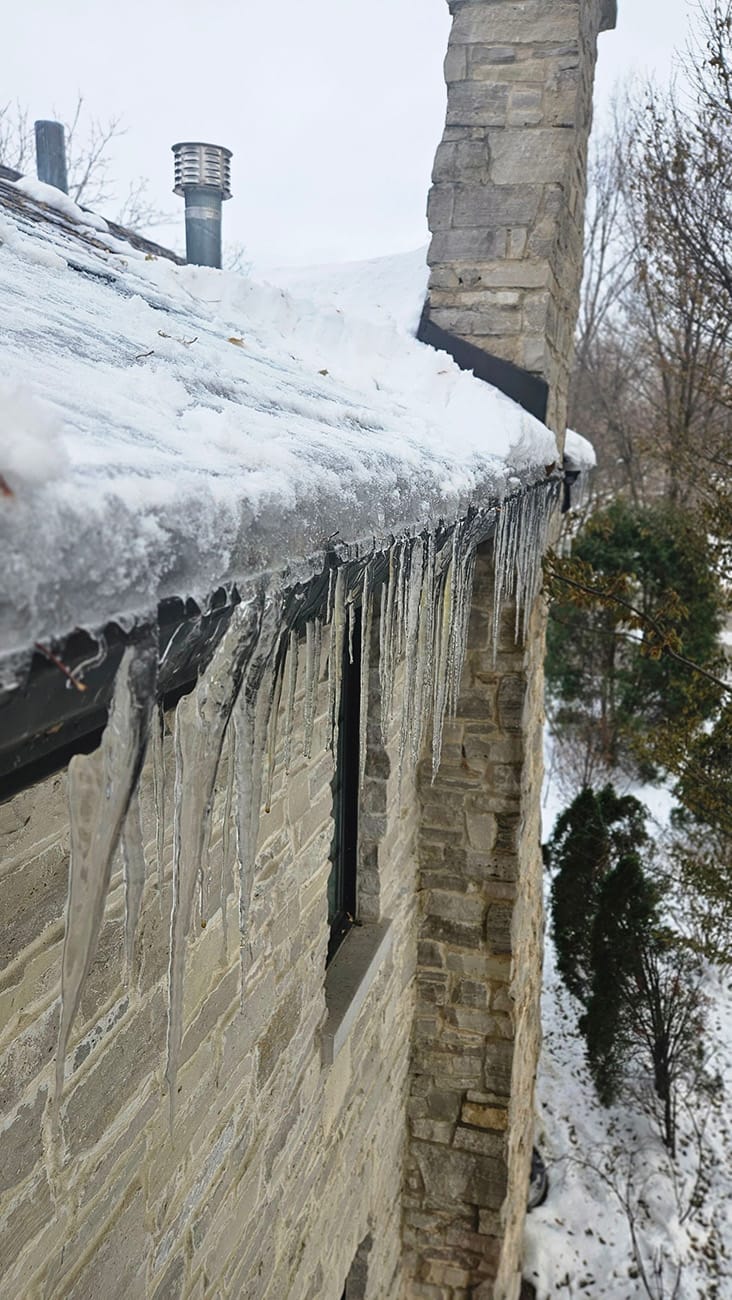
As the water reaches the overhang (the part of the roof sticking out past the exterior wall), it suddenly leaves the warm portion of the home. The eave is cold on all sides. The meltwater freezes instantly, forming a thick ridge of ice.

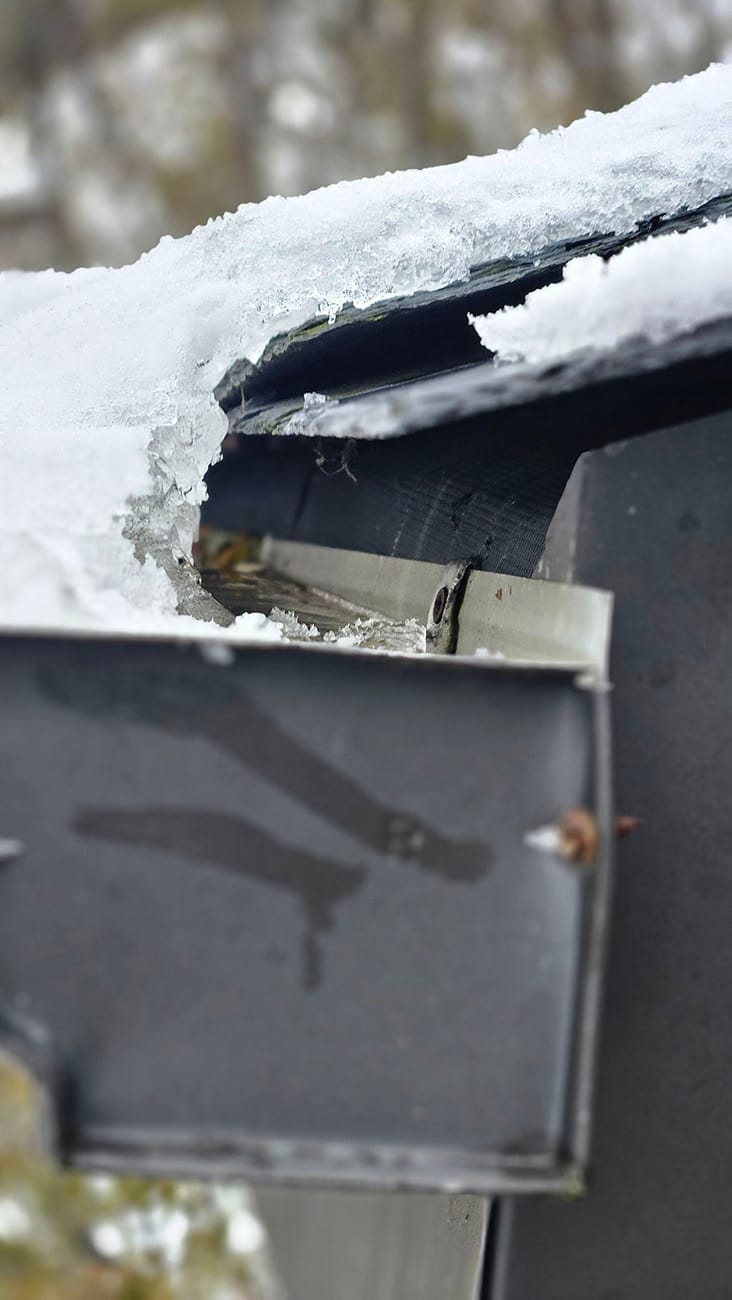
As this ice rim grows, new meltwater has nowhere to go. It can pool, refreeze and slowly seep under the shingles, defeating your roof’s water-shedding design. This is when water can begin to enter the house: wetting plywood, damaging walls, and staining ceilings.

Reading the Signs: What Your Icicles Say About Your Home

Brown Icicles: A Structural Emergency

If icicles look brown or tea-colored, it could mean that water has traveled through wood before exiting your home, pulling tannins and resins with it. This may be a sign of active rot, and the sooner it’s evaluated, the better.

Icicles From Soffit Vents

Icicles forming out of a soffit vent indicate water moving into the wall cavity. This can ruin insulation, soak framing and encourage mold inside your drywall.

Hidden Siding Damage

Ice dams don’t only harm roofs. Water can back up behind fascia boards and travel behind siding. We have seen cases where this can go on for years before showing visible symptoms.
Three Common Causes of Ice Dams

Ice dams result from a predictable sequence of failures inside the home:

1) The Primary Culprit: Air Leaks (Convection)

Warm, moist air finds every tiny gap if the attic floor isn’t sealed — especially around:
  • Recessed lights
  • Attic hatches
  • Plumbing stacks
  • Furnace flues and chimneys
Fiberglass insulation cannot stop air; it only filters it. If attic insulation looks gray or dirty, it can be evidence of massive air leakage.

2) Insulation (Conduction): The Thermal Barrier

Once air leakage is controlled, insulation prevents heat transfer.
  • Zone 5 homes should have R-49 to R-60.
  • Adding insulation without fixing air leaks simply hides the problem.
  • Compressed insulation loses R-value, especially near the roof edge.
  • Without baffles, cold air from soffits “wind-washes” the insulation, making it nearly useless.

3) Ventilation — Regulating Attic Temperature

Ventilation is a stabilizer, not a cure. If the attic leaks heat, no amount of vents will fix an ice dam. A balanced system (slightly more intake than exhaust) keeps attic temperatures cold and consistent.
Tip: The building-code rule of thumb: There should be 1 sq. ft. of net free ventilation for every 150 sq. ft. of attic floor.
When these three systems work together (air sealing, insulation, and ventilation), the roof stays cold, the snow stays frozen, and ice dams cannot form.

The “Don’t Do It” List: What Homeowners Should Never Try

Ice dams result from a predictable sequence of failures inside the home:

Stop Blaming Gutters

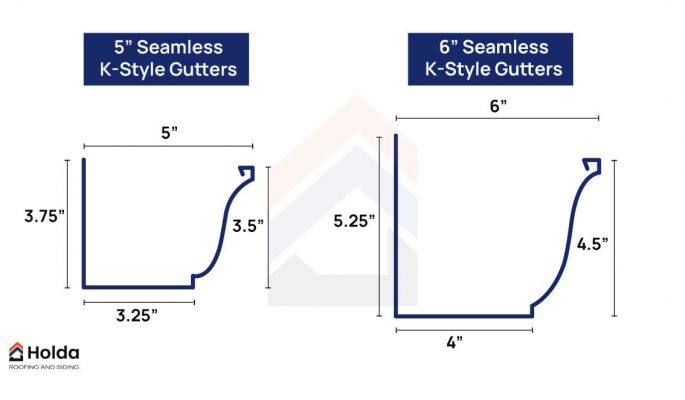
Gutters don’t cause ice dams. They simply collect water and ice created by heat loss.

Skip the Salt Socks

Rock salt can scar shingles, kill plants, and corrode metal.

Don’t Rely on Gutter Guards

Gutter guards don’t prevent ice dams because they don't address heat loss or attic airflow. Ice can build on top of guards just as easily — sometimes faster.

Never Chip Ice With Tools

Hammers and axes crack brittle shingles and create leaks instantly.

Avoid High-Pressure “Steam”

Many companies claim to steam ice but actually use high-temperature pressure washers, which remove shingle granules and void warranties.

The “Rain Suit” Test: How to Spot a Questionable Contractor

Here’s a simple visual cue:

  • The Wrong Way: If the operator shows up wearing a full rubber rain suit, send them away. That suit is needed because high-pressure water blasts everywhere.
  • The Right Way: A true steam professional — using low-pressure, high-temperature steam — can usually work in regular jeans. They’re not fighting water spray because the process is controlled and gentle.

What Homeowners Can Do Right Now to Address Active Ice Dams

FIRST, we recommend you go on a DIY Mission: The 3-Step Flashlight Test

Grab a flashlight, pop your head into the attic, and look for these three phenomenon:

1. Look DOWN (Air Leaks)

Inspect insulation around bathroom fans and hallway lights. If the fan pipes are loose or the can-light housing is unsealed, warm steam is being pumped directly into your attic. Dark or blackened insulation indicates dust being filtered through air leaks — a huge red flag.

2. Look UP (Humidity)

Shine your flashlight on the nail tips sticking through the roof deck. Rust, white frost, or droplets on the nails prove moisture is trapped inside your home. This is one of the clearest signs of attic moisture imbalance.

3. Look at the EDGES (Blocked Flow)

Point your light into the low eave corners. If insulation is packed tightly against the roof deck, your soffit vents are blocked and the attic cannot breathe.

This 3-step test reveals exactly why ice dams happen and where your home is losing efficiency.

Roof Raking

From the ground, remove the bottom 3–4 feet of snow with a roof rake. This removes the “fuel” feeding the ice dam.

Professional Steaming (Not Power Washing)

If water is leaking indoors, safe steaming is the only way to remove ice without damaging the roof.

For additional ideas and info, visit our blog on Ice Dam Removal and Prevention Strategies.

The Permanent Fix: A Building-Science Approach

1) Air Seal the Attic Floor (Non-Negotiable)

Seal every gap around:
  • Electrical penetrations
  • Bath fan housings
  • Plumbing stacks
  • Chimneys and flues
Safety note: Never spray foam directly against a hot flue. Use sheet metal and fire-rated sealants.

2) Upgrade Insulation to R-60

Blown-in cellulose or fiberglass ensures consistent coverage — especially in tricky areas like eaves.

3) Install Proper Baffles and Improve Ventilation

Ensure soffit vents feed the attic, and insulation doesn’t block airflow. Ridge vents must be continuous and unobstructed.

The Permanent Fix: A Building-Science Approach

Humidity Matters — The 35% Rule

During deep freezes, set your whole-house humidifier to 35% maximum. Any higher, and moisture will migrate into the attic, freeze to the roof deck, and melt later, creating the illusion of a roof leak.

Recessed Lights Are Heat Rockets

Old can lights leak enormous heat. Replace them with ICAT-rated fixtures or cover with fire-rated enclosures.

Knee Walls (1.5-Story Homes) Are Ice-Dam Hotspots

Cape Cod and bungalow homes often cannot physically fit R-60 insulation without altering the roof structure. For many 1.5-story homes, aggressive air sealing + ventilation + snow management (roof raking) is the only realistic long-term mitigation.

The Holda Difference: We Cure the Disease, Not Just the Symptom

At Holda Construction, we follow a simple principle that mirrors a doctor’s oath: “First, Do No Harm.”
Too many homeowners get trapped in a “Never-Ending Story”:
  • Handymen chip ice and damage shingles
  • Companies install expensive heat cables
  • Contractors blame gutters or suggest partial fixes
The result? Each winter, the leaks return.
We are not a snow-removal crew. We are Roofing & Ventilation Specialists with 25 years of experience diagnosing and correcting whole-house failures.

We Fix the Root Cause:

Ventilation

We clear blocked soffits, correct intake/exhaust balance, and install proper ridge vents so your attic breathes.

Insulation

We air-seal the attic floor and install code-correct R-60 insulation.

Exterior Envelope

We repair or replace roofing and siding using materials tested for Chicago winters.
Bottom Line

If you want a quick band-aid, call a handyman. If you want to protect your home for the next 25 years and stop the cycle of leaks permanently, call Holda Construction Roofing & Siding.

Wrapping it Up: Fix the Heat Loss, Not Just the Ice

Ice dams aren’t a winter inconvenience: they’re a sign that heat, moisture, and air are moving where they shouldn’t. The good news: with proper diagnosis and a focus on the whole system, they can be permanently solved.
If you’re seeing icicles, ceiling stains, or ice piling along the roof edge, the next step isn’t to chip away at the ice — it’s to understand why your home is creating it.
A comprehensive attic inspection can reveal the root cause and outline a long-term, code-compliant solution that protects your home, your comfort, and your investment.

Contact us today!

Contact us today to discuss your particular need — we’ll be happy to help.

Related Posts