IL License Number: 104.017181
IL License Number: 104.017181
CASE STUDY – MARCH 2026
Location: Lake Zurich, IL
Project Type: Targeted siding repair on a 25+ year-old, two-story, vinyl-sided home
Total Investment: $850
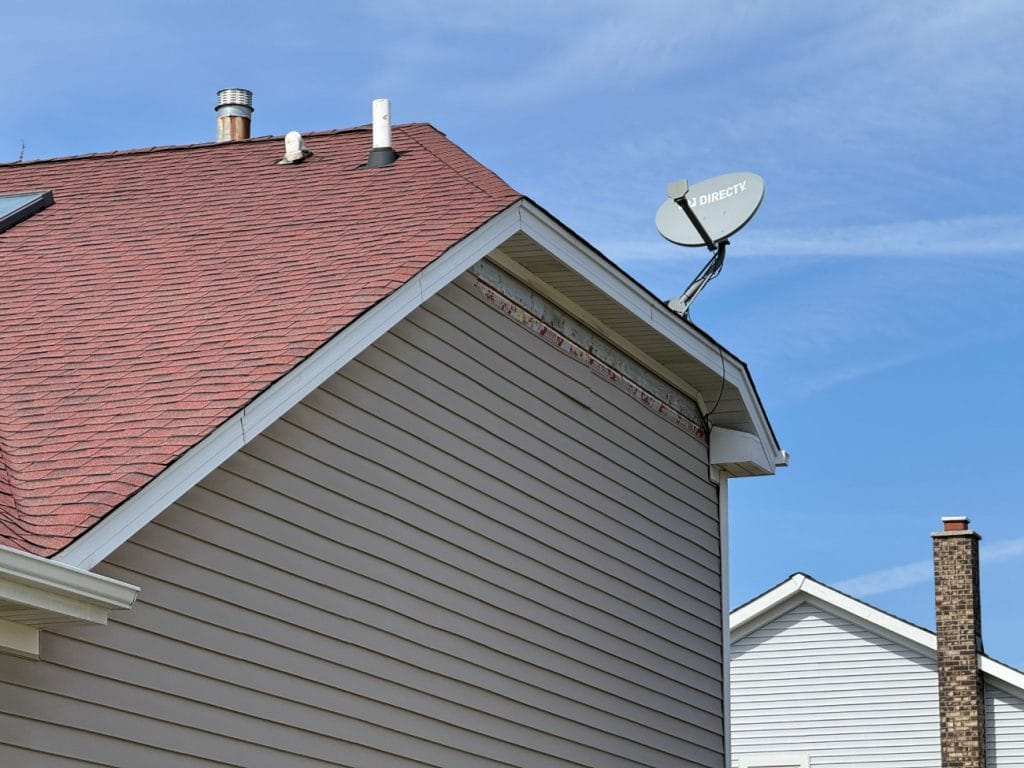
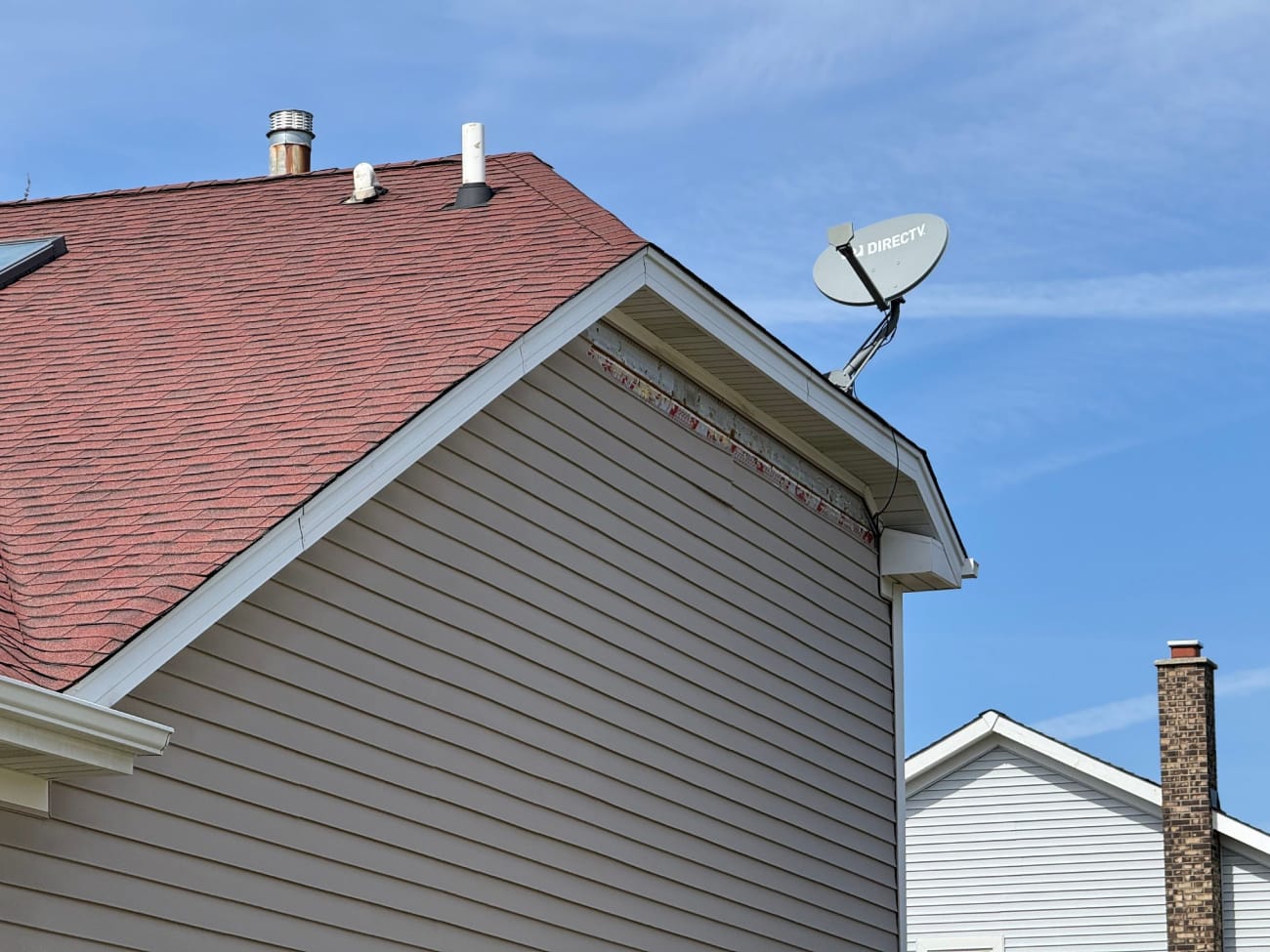
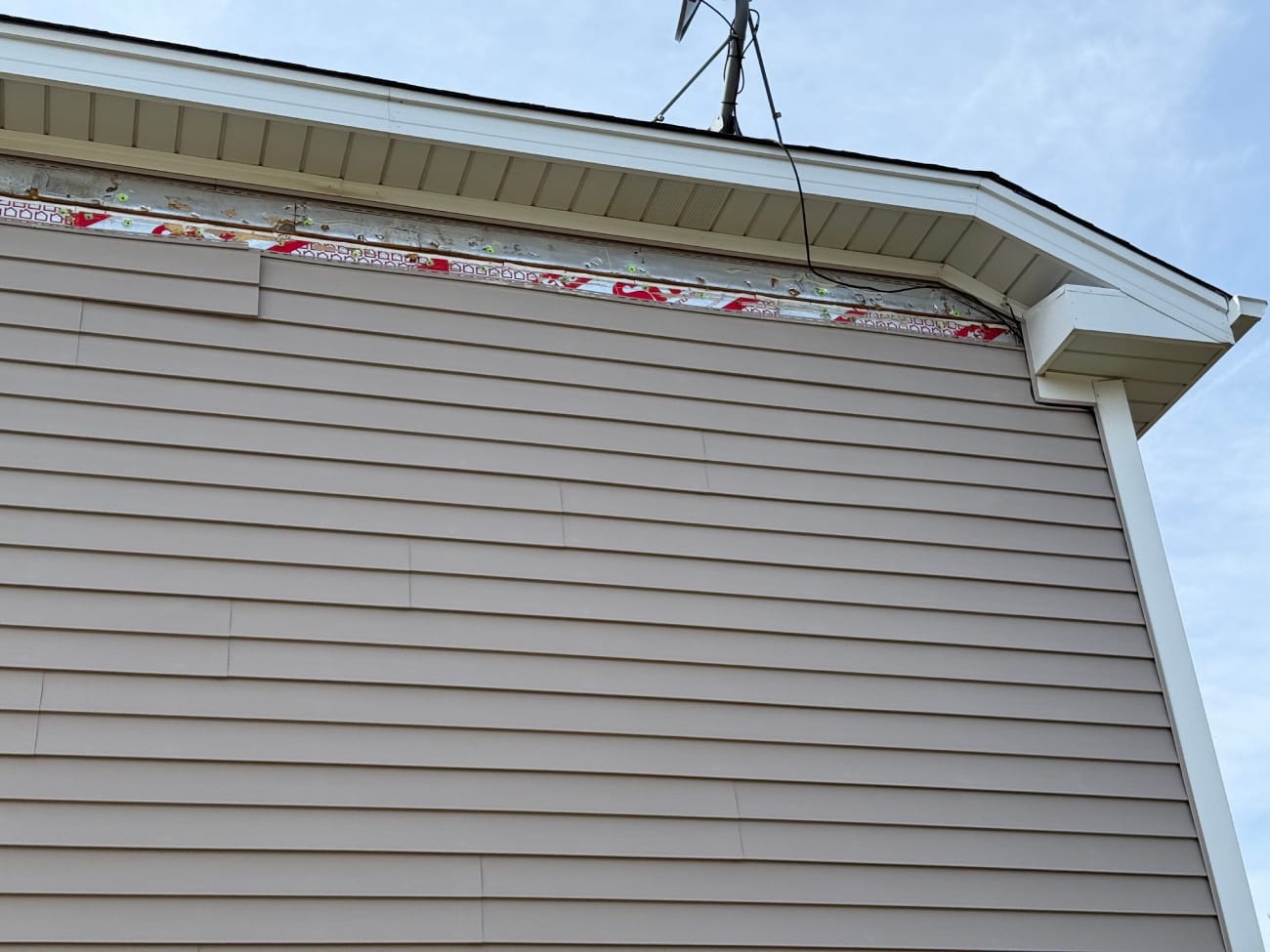
On March 20th, Wei called about a siding issue that, at first glance, seemed minor. A few panels had blown off the right side of her home during a windstorm. She wasn’t calling about a renovation or upgrade: she simply wanted the damage repaired so her home looked whole again.
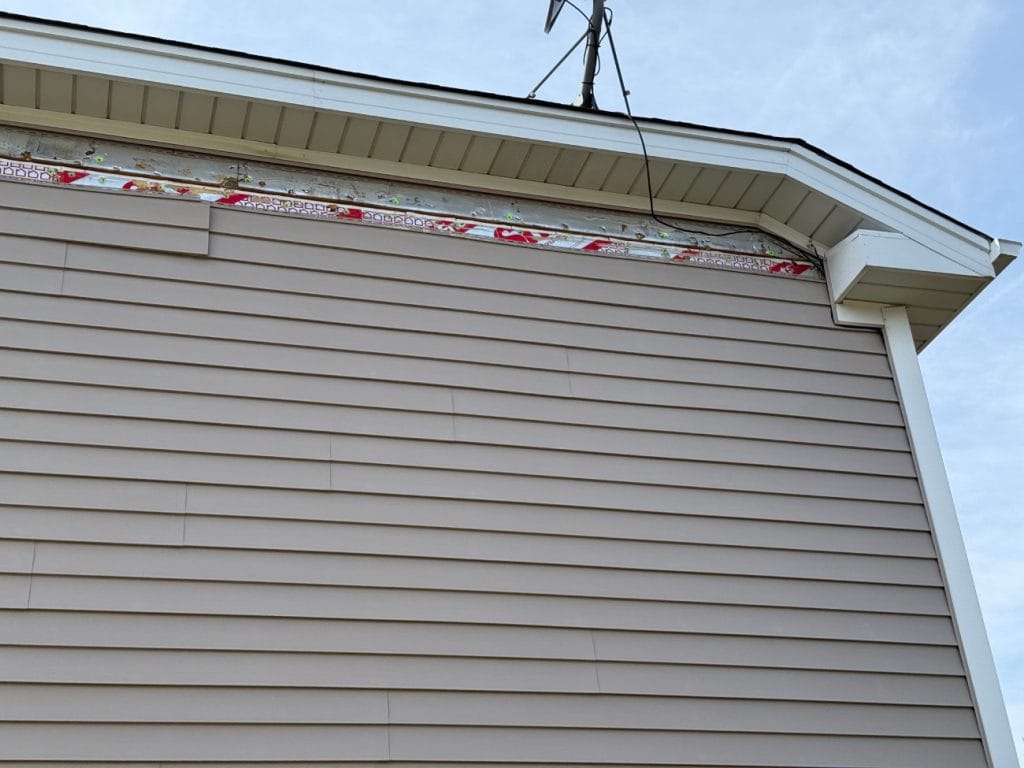
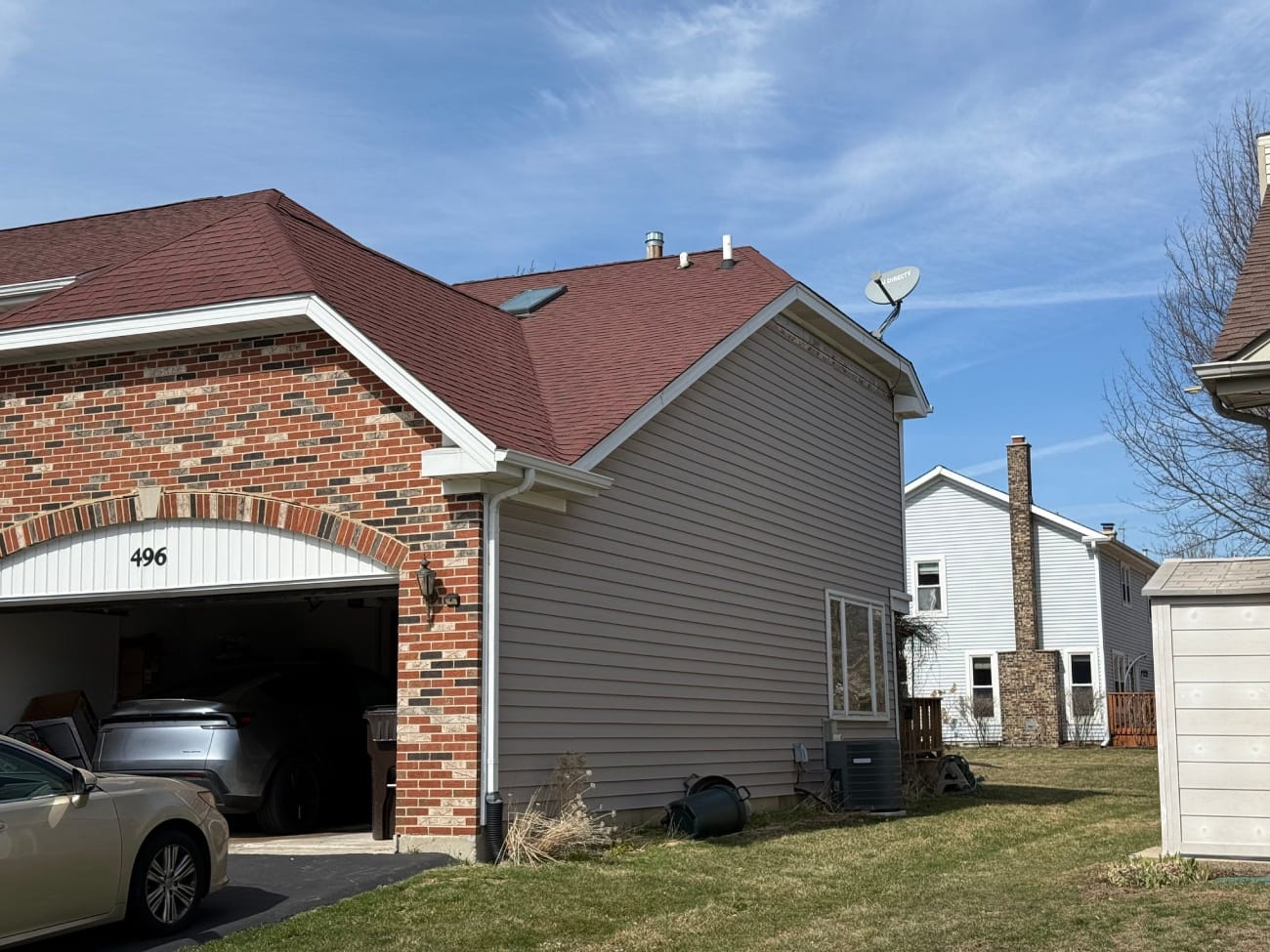
The challenge was where the damage occurred. This wasn’t a hidden section of siding tucked behind landscaping or along a side elevation. It was at the peak of the right side of her homewall, fully exposed and visible from the street. Every time Wei pulled into her driveway, it was right there. Small in scope, but impossible to ignore.
Once we looked closer at the material, the situation became more complicated. The siding was original to the home, over 25 years old, and a discontinued double-five 10-inch wood grain vinyl profile. Not just aged, but now obsolete. Mariusz noted during the inspection it’s a type he hadn’t seen in years.
At that point, most homeowners are given two options, neither of them satisfying. Replace the entire wall (often costing several thousand dollars) or accept a partial repair using “close enough” siding that never truly blends in. The first feels excessive, yet the second becomes a permanent visual reminder of the damage.
Wei wasn’t looking for either of those outcomes. She wanted the house to look right again without turning a small repair into a large project.
During the inspection, Mariusz approached the house not just as a set of materials, but as a series of sightlines. What is actually visible? What does the homeowner see every day? And just as importantly: what do they not see?
That’s when he noticed a section of siding on the right side of the house, above the garage. Technically part of the home, but practically invisible. It couldn’t be seen from the street, and from ground level it blended out of view entirely. It was a surface that existed, but it didn’t carry visual weight.
That observation changed the entire direction of the solution.
Instead of trying to source a match that doesn’t exist, Mariusz proposed something more strategic: use the home itself as the source of the match.
The plan was simple, but required precision. Several original siding panels would be carefully removed from the hidden wall and relocated to the damaged wall. That would restore the most visible part of the home using the exact same material: same age, same color, same texture.
The area those panels came from (a.k.a. the “donor wall”) would then be repaired using the closest modern siding available.
It’s a deliberate trade. The visible area gets perfection. The invisible area absorbs the compromise.
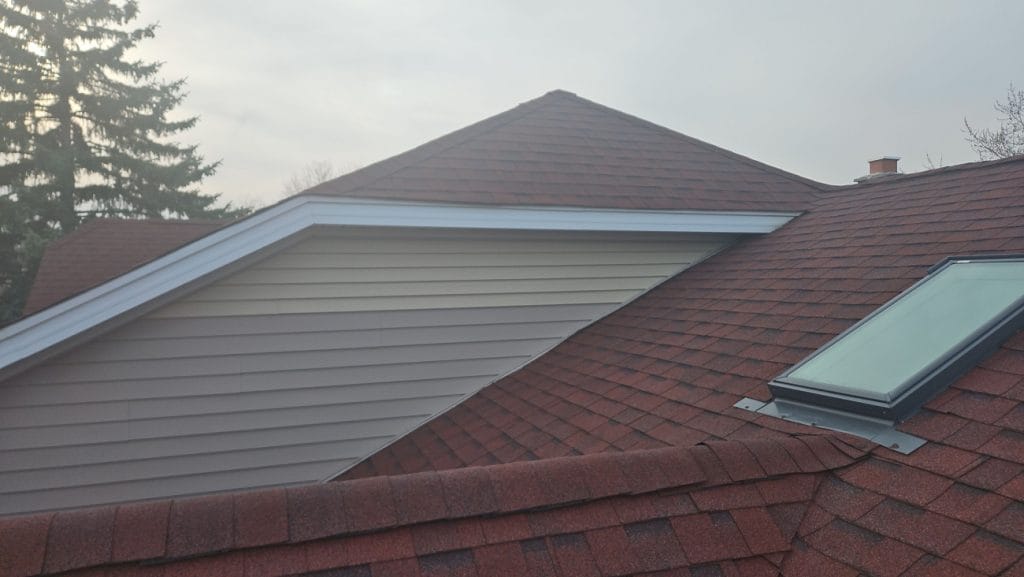
But in real life, no one stands there. It’s not part of the daily experience of the home. It doesn’t impact curb appeal. It doesn’t catch your eye when you arrive or leave.
The front of the house, which does matter, now looks exactly as it did before the damage.
This is the kind of solution that only works when you’re willing to be transparent about trade-offs and intentional about where they occur.
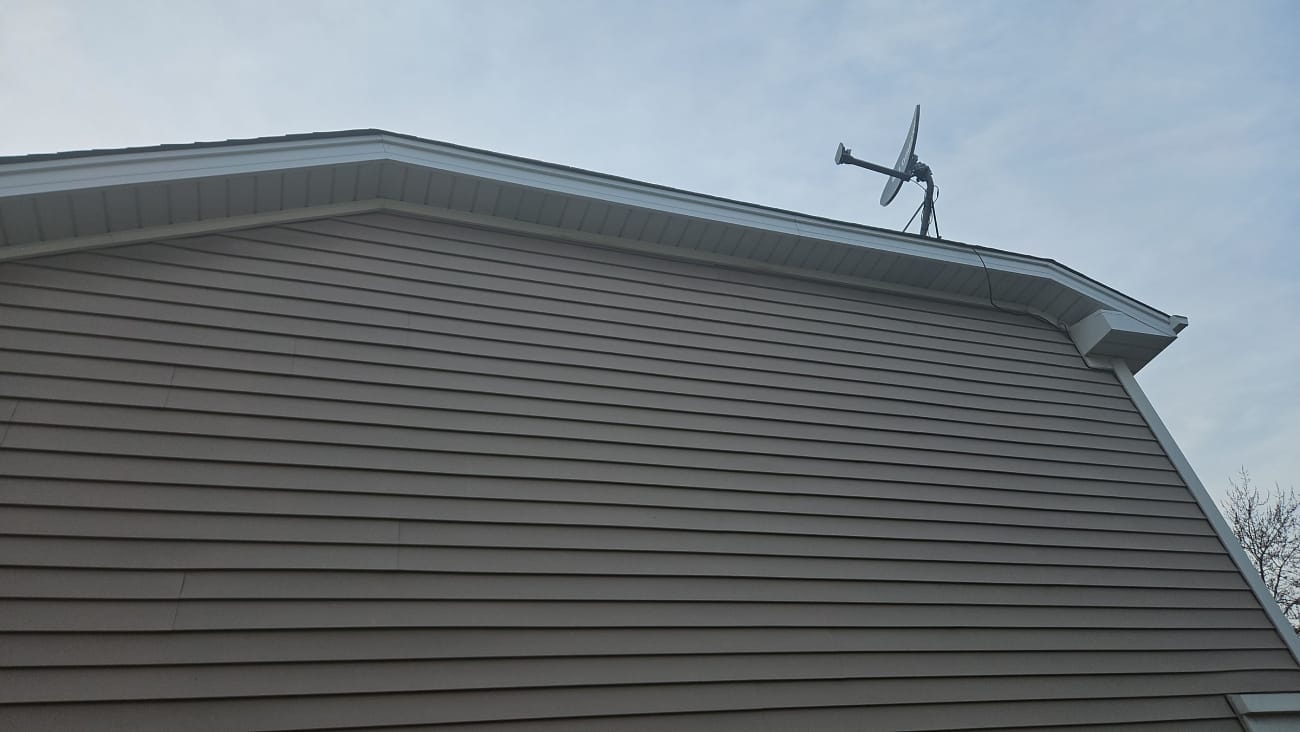
The siding repair was completed in a single afternoon. The original panels were removed carefully to preserve their integrity, then reinstalled on the damaged wall with precise alignment. The donor wall was finished cleanly with new material, ensuring full protection and durability.
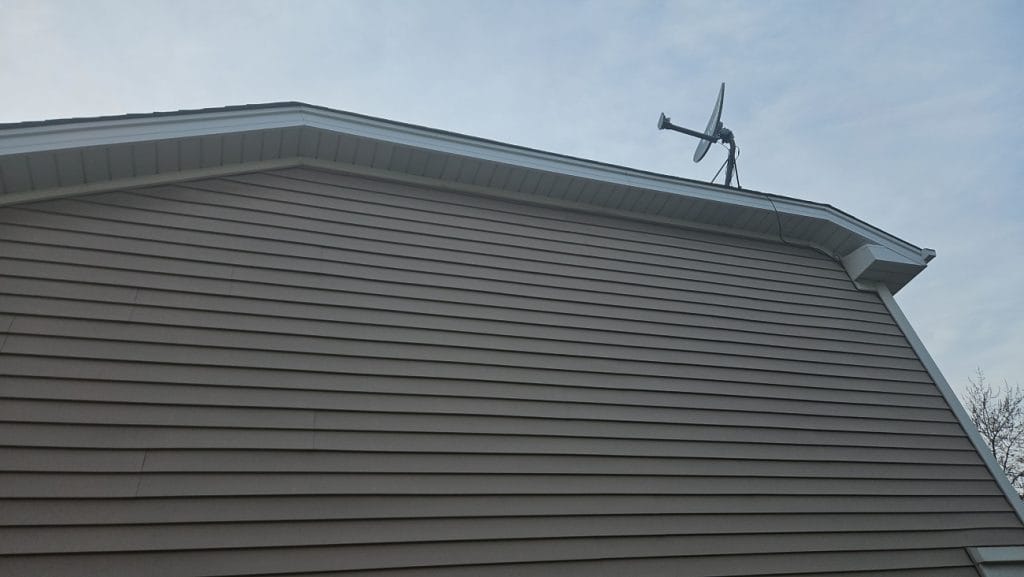
When Wei came out to review the work, she looked directly at the area that had been damaged.
And she couldn’t find it.
Later, she said: “I can’t even see the difference!”
She left a five-star Google review the next day, specifically calling out the approach:
This wasn’t about siding as a product. It was about understanding what the homeowner actually needed.
Most solutions in this situation focus on materials: what can be ordered, and what can be replaced. This solution focused on outcome: what the homeowner sees, what they feel, and what restores their confidence in their home.
Wei didn’t need new siding. She needed her home to look like nothing had happened.
Not always. This kind of solution depends on having a section of the home that can serve as a donor area without affecting the overall appearance. It also works best when the existing siding is still in good condition and the goal is visual continuity rather than full replacement.
But when those conditions are present, it can eliminate the need for unnecessary upgrades and deliver a result that feels complete: not compromised.
Fill out the form below to get started!

📞 FREE Consultations (Call or Text):
847.847.2883
Are You Facing Something Similar?
If you’ve been told your siding can’t be matched, that may be true in a traditional sense. But it doesn’t always mean replacing the siding is the only option.
Sometimes the better solution is already on your house. You just need someone who knows how to see it.
Schedule an inspection with Holda Construction, and we’ll help you understand what’s actually possible before you commit to more than you need. Call 847.847.2883, or contact us online. We’d be happy to help!
Guides project planning and key homeowner decisions. Sets standards and approves final deliverables.

Coordinates scheduling, materials, permits, and day-to-day communications.

Leads the crew on site; directs daily work; manages walkthroughs and quality control.

Siding installations and repairs.

Siding installations and repairs.

Gutter and downspout installations.

Gutter and downspout installations.

Full roof replacements.