IL License Number: 104.017181

CASE STUDY – JANUARY/FEBRUARY 2026

Strange Sounds From the Attic: Ventilation & Insulation Overhaul of 1982 Chicagoland Home

Location: Hoffman Estates, IL4300 Lombardy Lane

Project Type: Attic ventilation correction + full insulation replacement | two-story subdivision home

Total Investment: $15,000 (Ventilation $5,000 + Insulation $10,000)
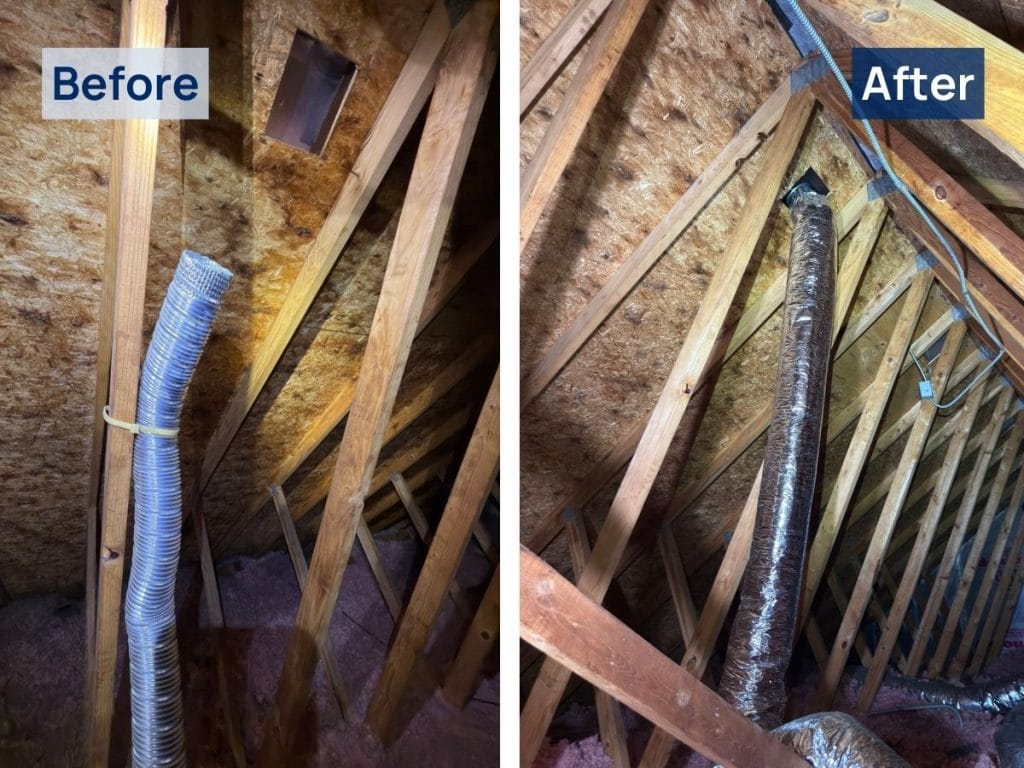
Disconnected Bathroom Exhaust Vents in Hoffman Estates Home

Defining the Homeowner’s Problem

Kent and Carol Deener have lived in their Hoffman Estates home for 44 years. They raised their family there. And with a history like that, they know every sound the house makes.

So when Carol heard clicking and dripping above the ceiling in January, she assumed the worst.
“I heard it yesterday… I thought there was an animal up there!”
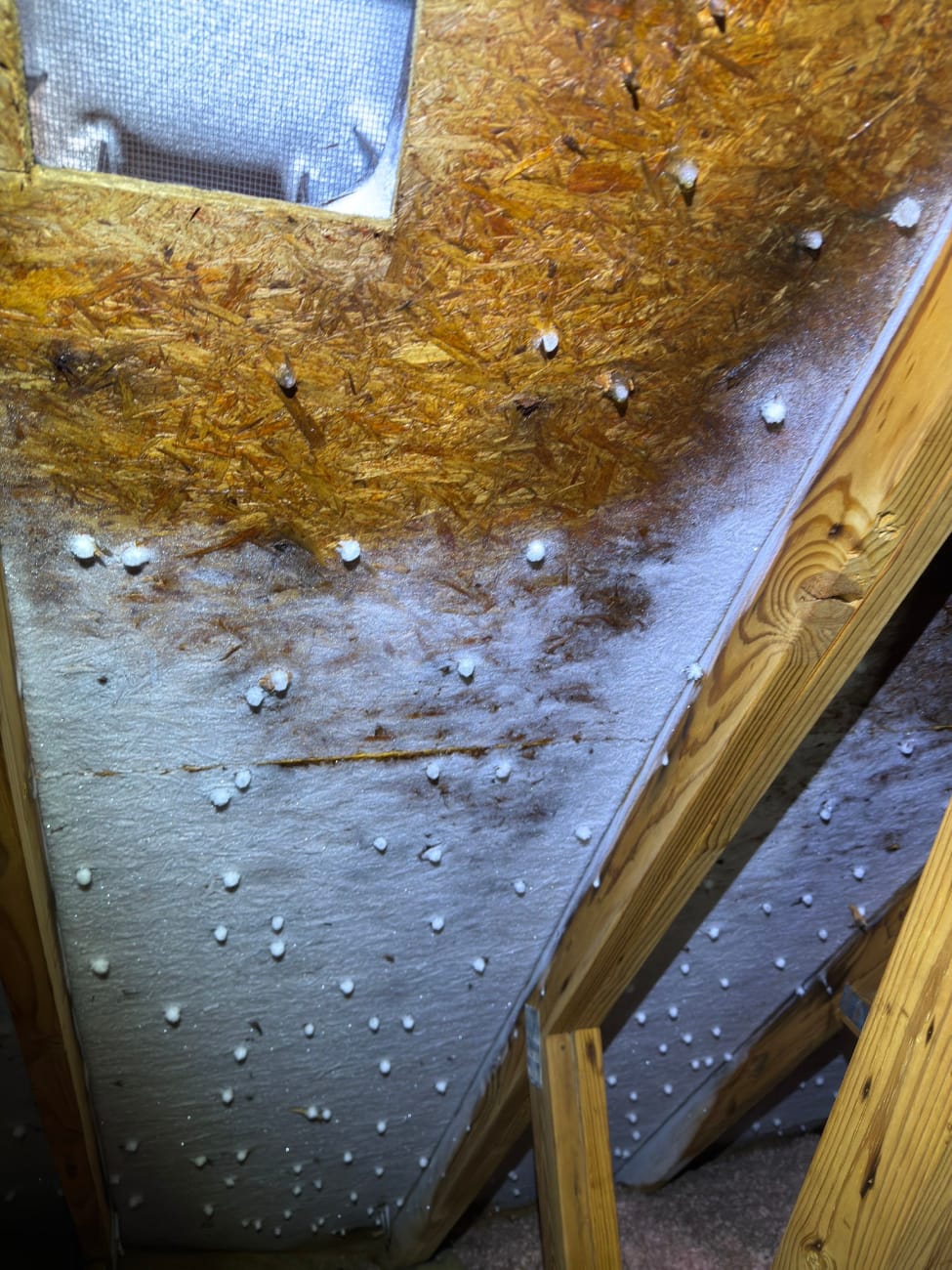
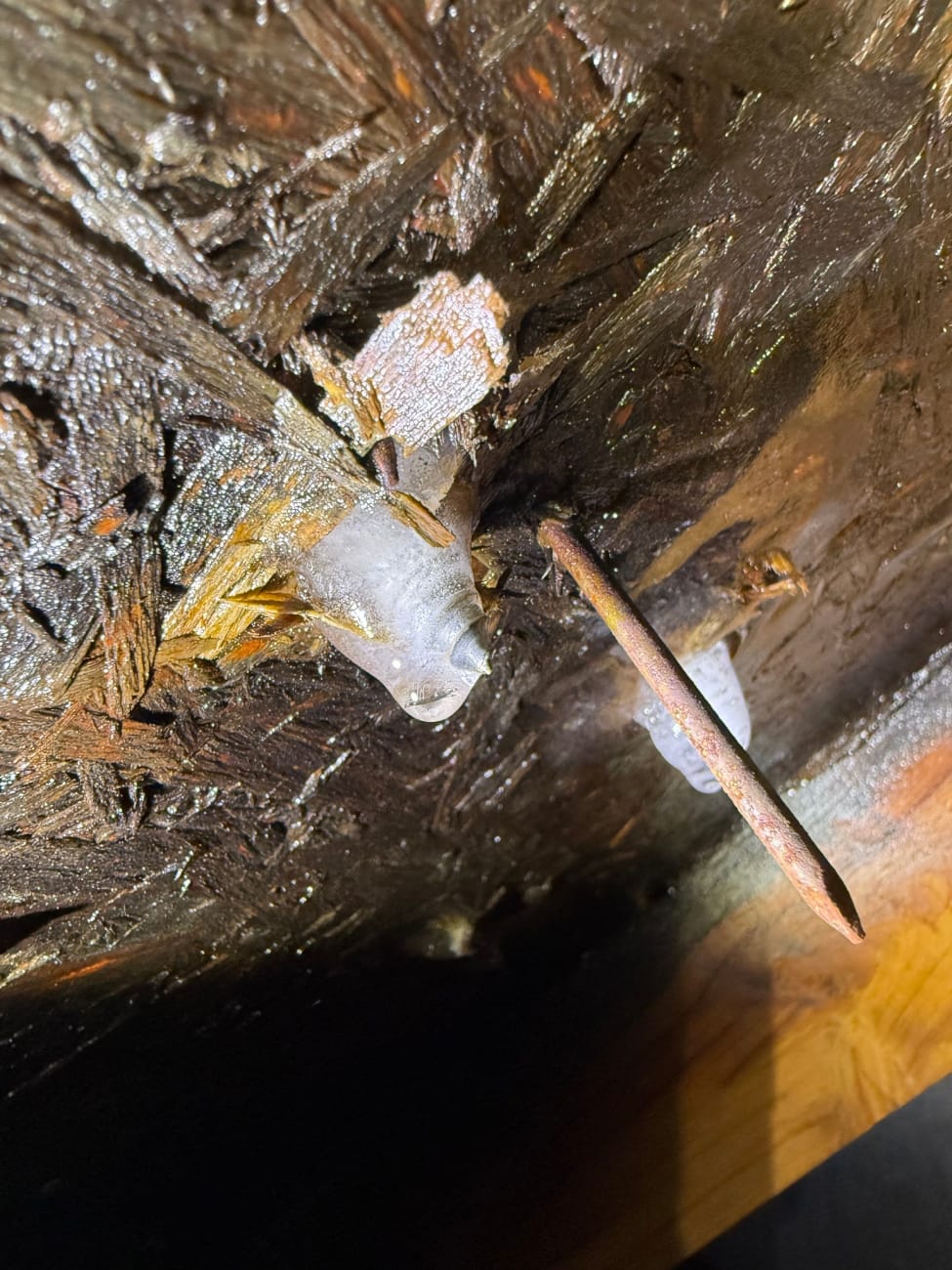
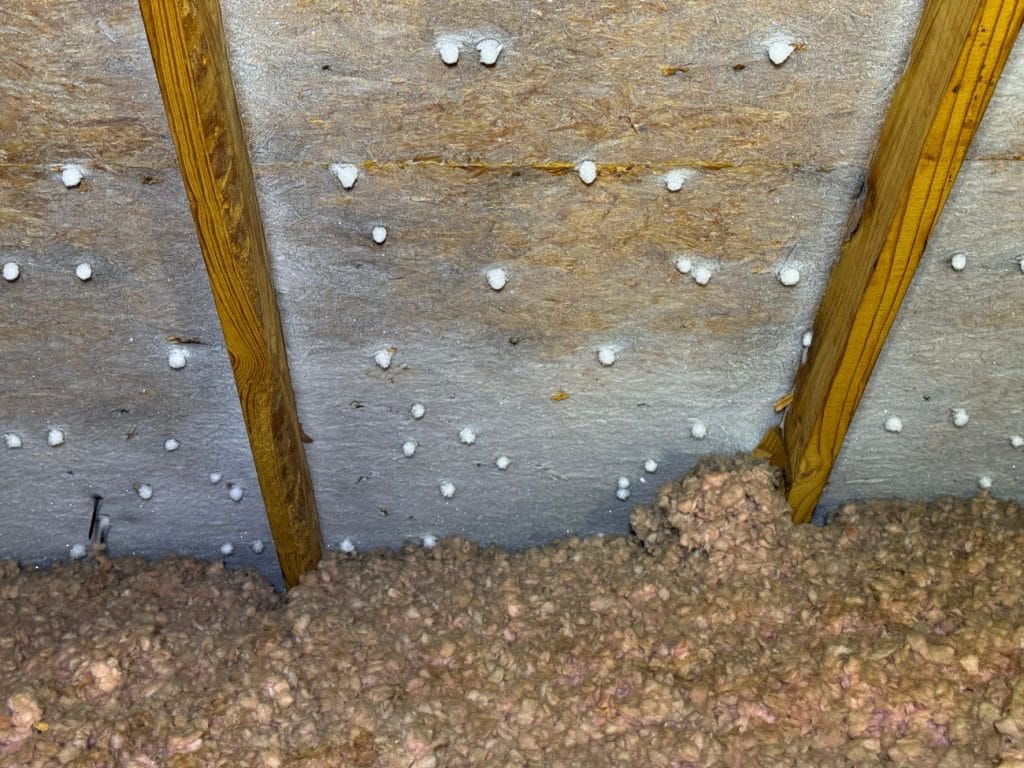
Frost on Nails and Screws in Hoffman Estates Home Attic
Kent climbed into the attic to investigate and saw frost forming on nails and screws. When temperatures shifted, it melted and dripped. He could not figure out what he was looking at or how to begin to address the problem, so that’s when he called us.

The External Issue

At first glance, it seemed solely like a moisture condensation problem. But during our 2–3 hour inspection (which included a full exterior review and 60+ attic photos), it became clear this wasn’t caused by a single mistake.
The attic wasn’t just “getting wet.” It was functioning like a sealed thermos.
Multiple layers were working together:
  • Air leaks throughout the attic floor: Warm interior air escaping around electrical wiring, plumbing pipes, recessed lights, and every ceiling penetration
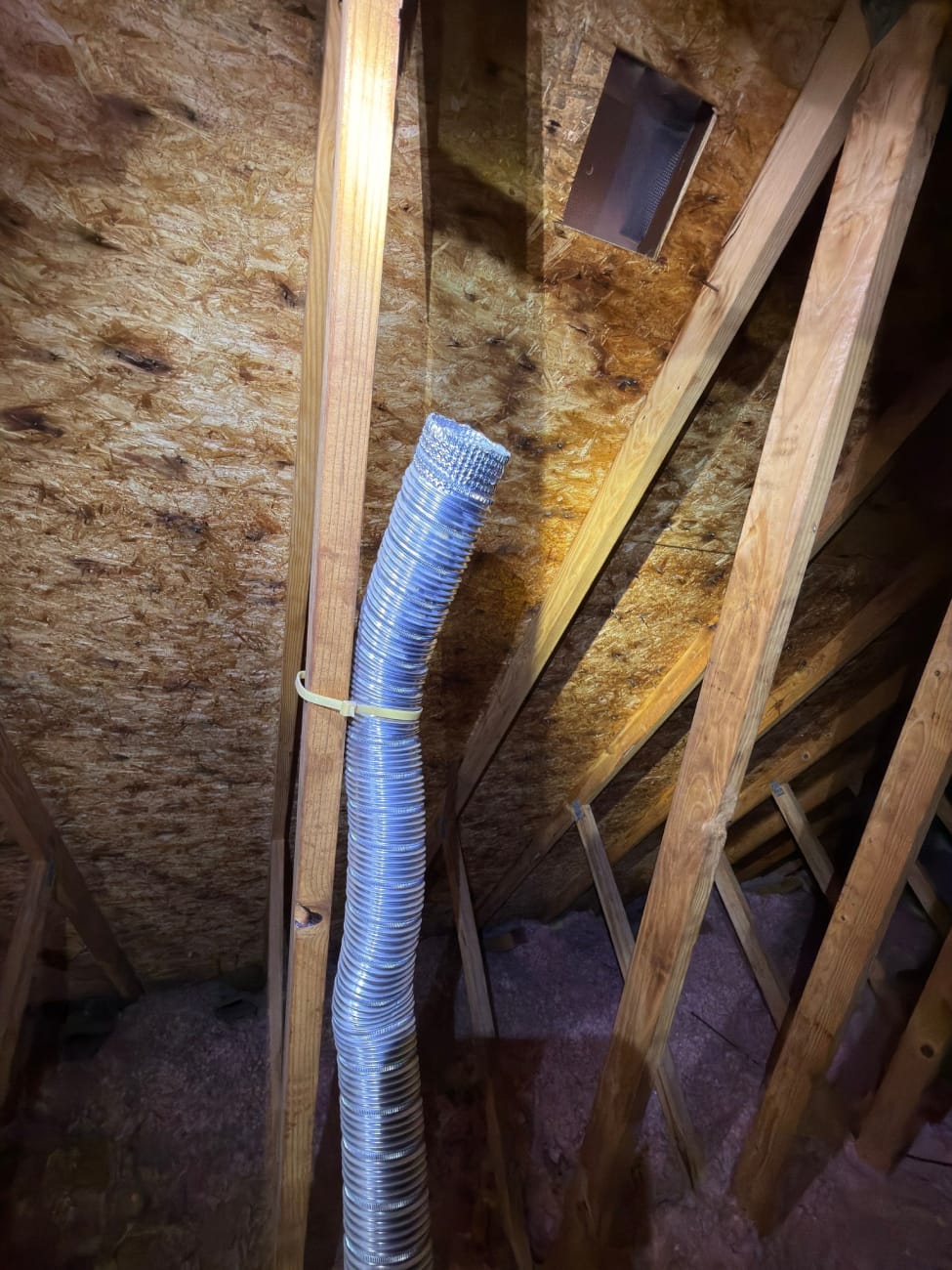
  • Two bathroom exhaust fans venting directly into the attic: Adding concentrated bursts of steam daily
  • Blocked soffit intake baffles: Insulation covering airflow pathways
  • Only mushroom vents on the roof: No ridge vent, severely limiting exhaust
  • Insufficient insulation (approximately R14 instead of today’s R49–R60 standard).  What is R-Value? Learn more by visiting our blog.

All of this combined created the real issue: Warm, moist air was constantly entering the attic, but it had nowhere to go. This is why the attic was too warm in winter, frost formed on multiple nails, and why the insulation was wet and compacted.

The disconnected bathroom vents were the most dramatic discovery, but they amplified the problem: they didn’t create it alone.

For 44 years, warm air rose into an attic that couldn’t breathe.
A Deeper Frustration

About seven years ago, Kent and Carol had invested in a professional bathroom remodel, during which a new exhaust fan was installed. They trusted the job was done properly, but the fan had never been connected to the exterior. It was blowing steam directly into the attic.

That mistake didn’t single-handedly cause the ventilation imbalance, but in an attic already functioning like a steamroom, it made everything worse. Kent couldn’t help but feel burned by that earlier contractor. How could something so basic be overlooked?

The entire $15,000 corrective project traced back not to one dramatic failure, but to multiple overlooked building-science fundamentals: one of which was that missed exhaust connection.

There was also concern about what had been happening unseen: hidden moisture, possible mold, long-term structural stress. Carol put it plainly:  “How many years has this been happening? Being in the attic… it’s something you don’t really see… but this? You will feel it.”
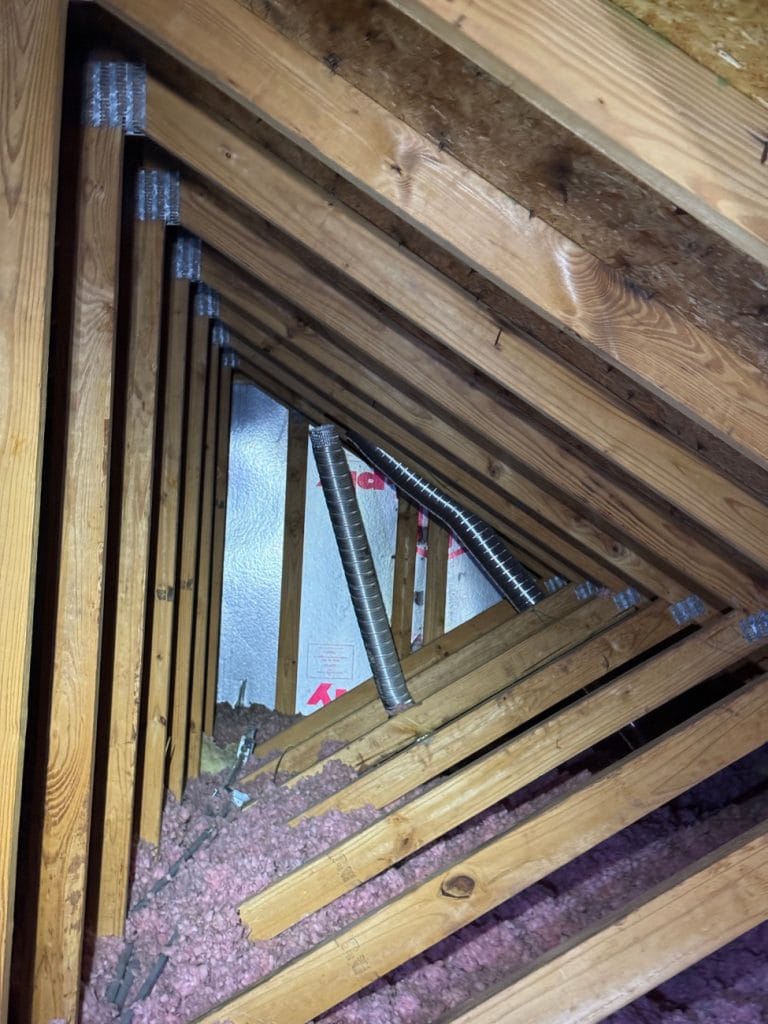
Disconnected Bathroom Vent in Hoffman Estates Attic

Risks of Inaction

While no one is ever excited by the prospect of spending significant money to fix unexpected home issues, Kent and Carol knew this couldn’t be left as-is. If left alone, this condition can lead to:
  • Mold growth
  • Rotting roof decking
  • Shortened roof lifespan
  • High heating bills
  • Ice dams
  • Structural damage

Kent asked a powerful question:  “I wonder how many other houses have this problem, and they don’t even know it?”

And, from our experience in early-1980s Northwest suburban homes, we can tell you: it’s more common that you’d think.

If you’d like to learn more about what to look for to ensure the safety of your own home during the cold months, visit Holda Construction’s 11-Step DIY Roof & Attic Inspection Guide. Here you’ll find helpful tips on problem areas to fix early, before the problem morphs into something bigger.
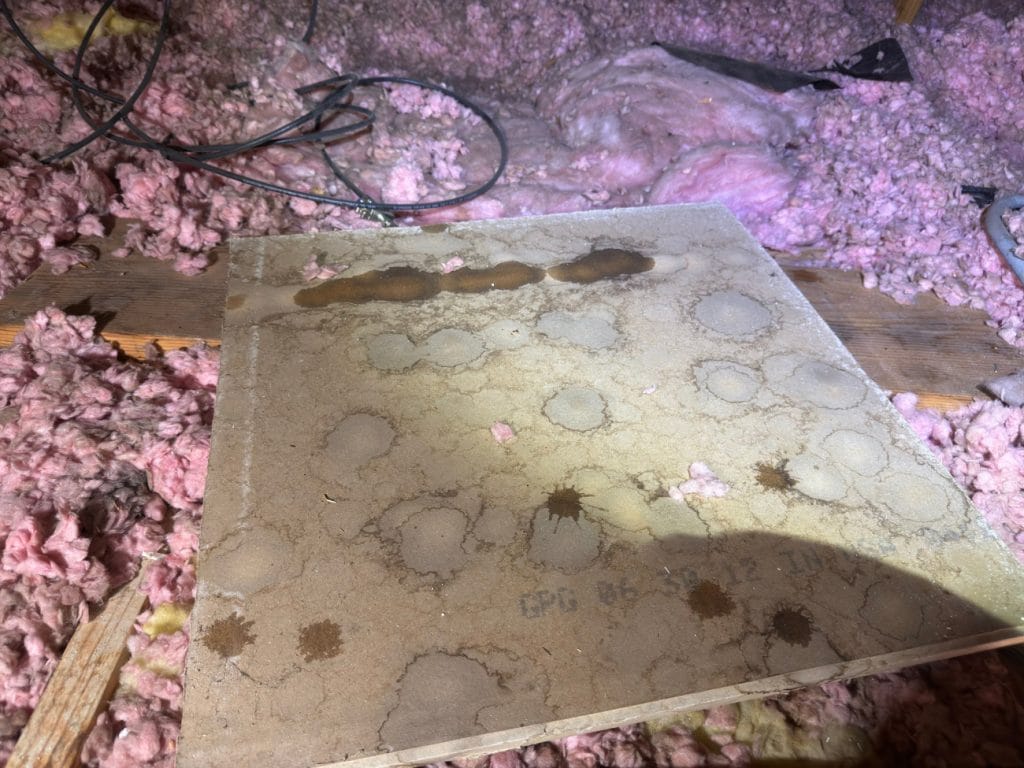
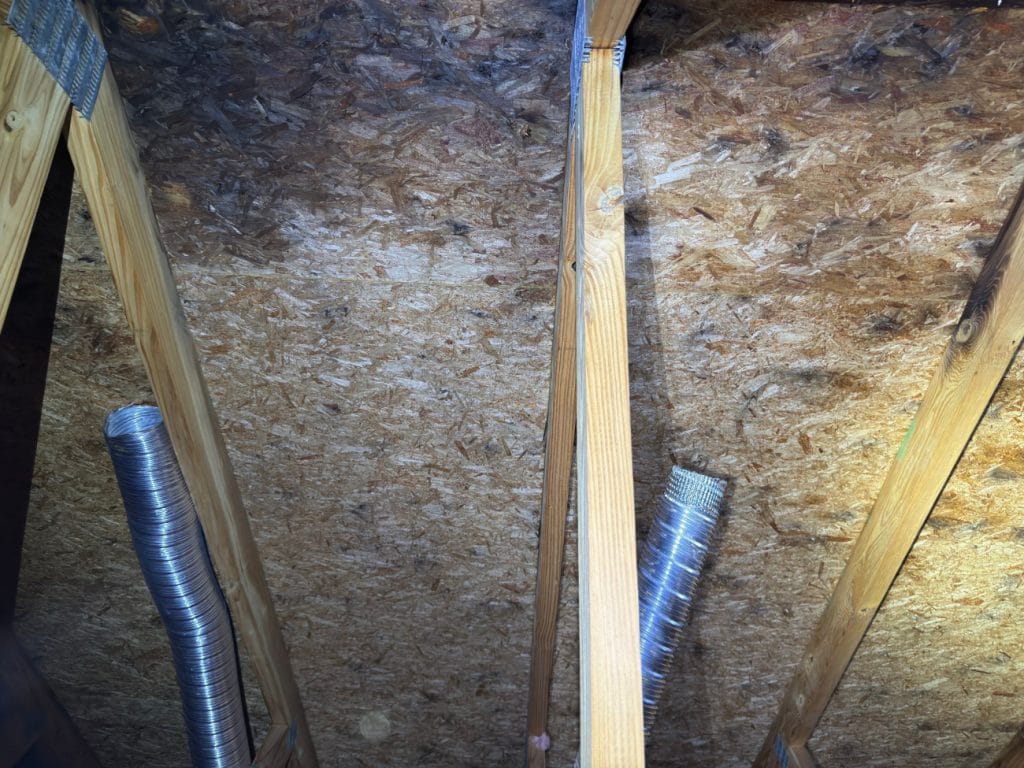
Mold Growth in Hoffman Estates Attic

Finding a Guide You Can Trust

Kent did what careful homeowners do. He researched moisture and frost in the attic and looked for well-reviewed local contractors. He found Holda Construction online and, from his research on the company, decided to make the call.
We scheduled an inspection the very next day.
What built comfort:
  • We documented our findings thoroughly with a report and 60+ inspection photos

    To learn more about our inspection process, visit Free vs. Paid Roof Inspections: What Homeowners Need to Know. Here we provide a clear, step-by-step summary so you know what to expect from our inspections.
  • We provided a clear explanation in plain language
  • We offered multiple options: not one “take it or leave it” proposal
  • And, following a strong company principal, we applied no pressure at all.
We explained something most contractors don’t:

Proposal vs. Invoice: The Transparency Difference

Many large projects start with a small proposal number, then grow through surprise additions.
That’s not how we operate.
  • The proposal defines scope clearly.
  • If hidden conditions are discovered, we issue a written Change Order.
  • For large jobs, unexpected work is priced near Cost of Goods Sold with minimal or no sales margin.
  • Nothing is done without written approval.
Transparency builds trust before the first tool comes out.
"I could tell you would not take advantage."
- Carol

The Solution & The Journey

Options Presented

  1. $1,200 — Reconnect vents only
  2. Partial ventilation correction
  3. Ventilation system upgrade
  4. Full ventilation + insulation restoration ($15,000)

Kent’s mindset was practical:  “If we’re doing the minimum, we might as well do the maximum.”
The minimum option would have stopped new moisture from being added — but it wouldn’t have fixed 44 years of trapped damage. Wet insulation would remain, airflow would still be restricted, and moisture would still linger in blocked areas.
Mariusz explained it with an analogy that resonated: Leaving the old insulation in place would be like putting fresh blankets on top of dirty sheets.
Carol focused on cleanliness and health:
"We’ve got to do the insulation… just to clean it up. If nothing else, to clean it up and get rid of what could become mold."

Milestone Timeline

The couple chose a phased approach:
January 27
Tuesday
Initial call
January 28
Wednesday
Full inspection + photos + options
February 2
Monday
Phase 1 ventilation correction
February 19
Thursday
Phase 2 insulation replacement
February 20
Friday
Final walkthrough

Phase 1 — Ventilation Correction ($5,000)

Completed in one day:
  • Reconnected both bathroom fans to dedicated roof vents (tested)
  • Installed 64 feet of ridge vent
  • Installed vented soffit panels (Desert Sand color to match Mastic siding)
  • Removed satellite brackets
  • Sealed unused roof penetrations
The attic could finally breathe.
Hoffman Estates Attic Bathroom Repair

Phase 2 — Full Insulation Replacement ($10,000)

  • Vacuumed out 42-year-old pink insulation
  • Spray-foam sealed all penetrations
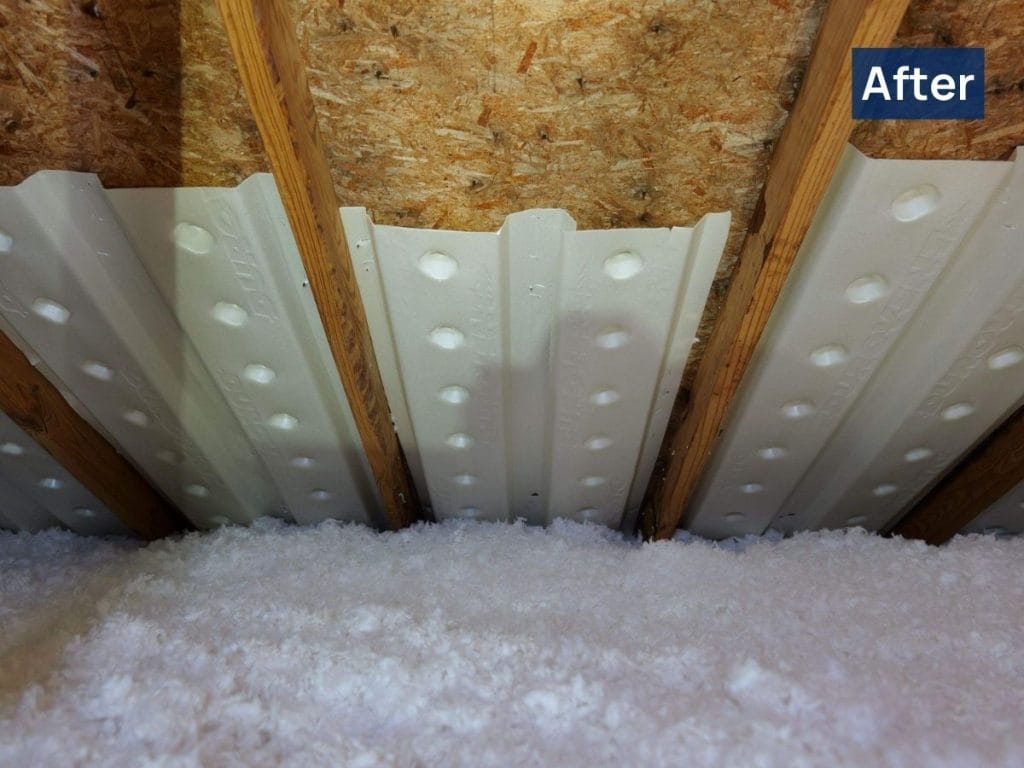
  • Installed baffles on every rafter bay
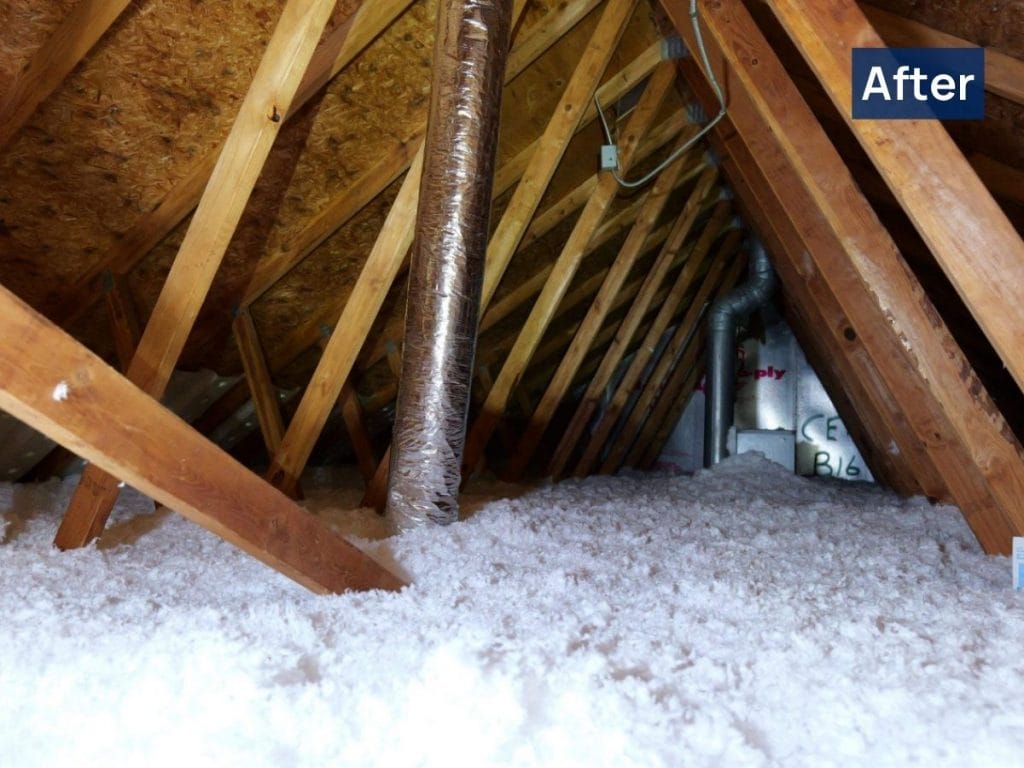
  • Blew in fresh insulation to R60

Old insulation: approx. R14

New insulation: R60

186 photos and videos documented the entire process in CompanyCam and were shared with the homeowners.
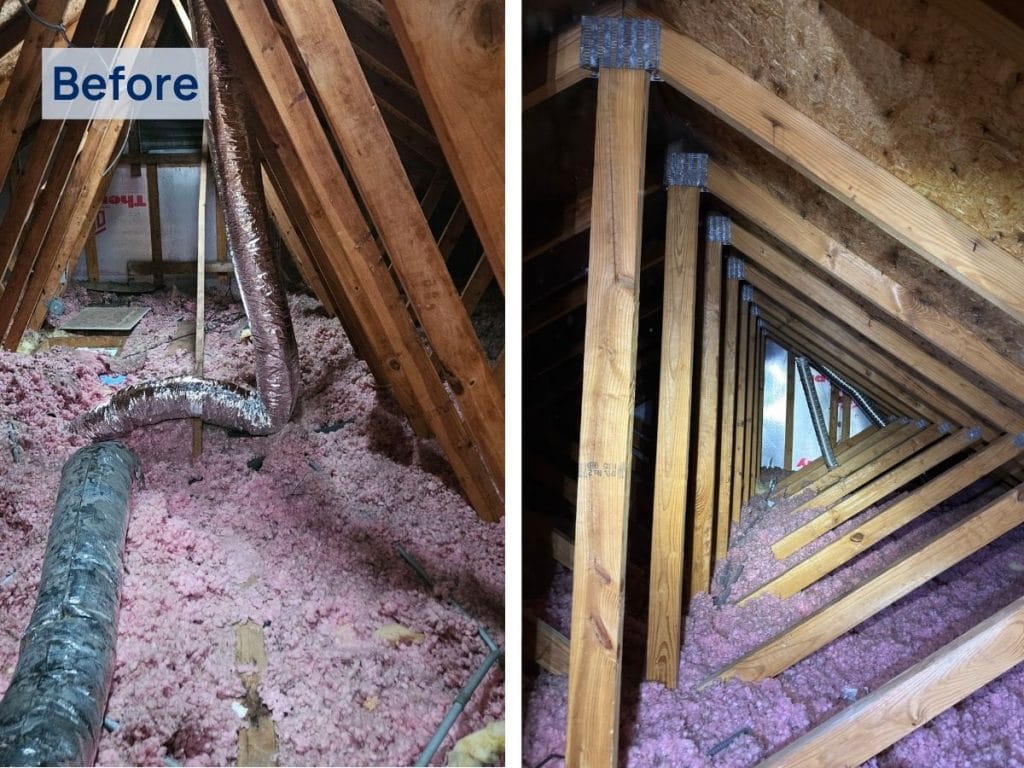
Hoffman Estates Attic Before Insulation Replacement
Hoffman Estates Attic After Insulation Replacement

Radical Honesty

During inspection, we noticed sections of roof plywood weakened by long-term moisture.

We could have recommended immediate roof replacement, but didn’t.

Opening the roof now would have been, in Mariusz’s words, “Pandora’s box,” because it would require tearing apart a roof that still had usable life left. Instead, we advised addressing it at the natural re-roofing cycle in 5+ years.

That saved the Deeners tens of thousands today.

The “After” Story

On the final walkthrough day, Kent climbed into the attic with us. The difference was immediate: “Man… this is like a breeze! Wow.”

As soon as his head cleared the opening: “I can feel the air moving.”

Before the work, the attic had felt warm, heavy, and stale. It carried the smell of trapped moisture — decades of condensation cycling through insulation and wood.

After ventilation correction, air sealing, and new R60 insulation, the space felt completely different.

We asked Kent what it smelled like now: “No smell. No odor. Fresh.”

That’s the sensory payoff of proper building science. Not just better numbers on paper or corrected vents, but clean air moving through a healthy attic.

Carol smiled and said: “I want to hear those little tick, tick in the air.”

Instead of the concerning noises from dripping moisture that set the project off, Carol no longer feared the noises above her, because the mystery was solved and the root cause was eliminated. Instead of signaling hidden damage or an animal intrusion, the subtle sounds of the attic now represented fresh air actively moving through a healthy, properly functioning ventilation system. The noise transformed from a source of anxiety into a comforting reassurance that their home was finally “breathing”.

Before:

  • Warm, stagnant, damp
  • Odor of trapped moisture
  • Frost-covered fasteners

After:

  • Cool, ventilated air flow
  • No odor
  • Clean white insulation
  • Proper exhaust venting

Measurable Improvements

  • R-value improved from approx. 14 → 60
  • 2 improperly vented fans corrected
  • 64 ft ridge ventilation added
  • Project completed in 3 weeks

Post-Construction Wrap-Up

Warranty Information

The formal contract prepared by Mariusz explicitly included a 5-year workmanship warranty stating that “Holda stands behind the work”. Furthermore, the contract clearly guaranteed that the attic ventilation system would be properly balanced and that both bathroom exhaust fans were successfully tested to verify airflow.

Care Tips (Homeowner Education)

Mariusz provided two critical care and maintenance tips to the Deeners to ensure the long-term health of their attic:
  • Humidifier Settings: During the initial inspection, Mariusz noted the home’s humidifier was set to 45%. He instructed Kent that the proper winter setting is 25-30%, as 45% adds too much moisture to the air which then migrates into the attic. Kent adjusted this on the spot.
  • Roof Deck Strategy: The stained plywood roof sheathing was explicitly left alone. Mariusz advised the homeowners against preemptively tearing up their roof, instructing them instead to wait for their natural re-roofing cycle in 5+ years to inspect and replace the wood from above.

Ongoing Support

Holda’s support did not end when the final check was signed.
  • The Winter Check-Up: During the final walkthrough, Mariusz recommended they schedule a follow-up “winter check-up” in about a year (February 2027). The goal of this check-up is to verify how the newly installed system performed through its first full winter, ensure condensation issues are resolved, and check if the stained plywood is drying out properly.
  • Network Referrals: While not direct support for the attic, Mariusz maintained the relationship by offering his network connections when Carol expressed interest in future interior remodeling, and the homeowners scheduled an immediate HVAC duct cleaning to complement their refreshed attic.

When asked about the project’s success, Kent summed it up to Mariusz in this way:

“The key is you own your company, so you have to make sure whoever's doing the work has to do it right. Trust. Trust: this is the deal.”

Kent did admit there was initial cost shock.  “After a little cost shock, we are glad to get it done.”

But that’s honesty. And we respect that.

We walked away proud. And not just because the attic performs better, but because Kent and Carol feel peace.

Fit Filter

Who is this type of project good for, and who may not be a good fit?

Perfect for:

  • 1975–1995 Northwest suburban homes
  • Homeowners noticing frost, condensation, or warm attics
  • Families wanting a permanent solution

Not ideal for:

  • Homeowners looking for a short-term cosmetic patch only
  • Investors flipping without concern for long-term building health

Get Free Quote

Fill out the form below to get started!

Need New Gutters? Let's talk!

Mariusz Holda

Owner: Mariusz Holda

📞 FREE Consultations (Call or Text):
847.847.2883

Contact us today!

Are You Hearing Strange Sounds in Your Attic?

If your Northwest suburban home was built in the 1980s, there’s a real chance your bathroom fans are venting into your attic, and you don’t know it.
You may not see the problem. But it can cause significant issues.

Use our 11-Step Attic Inspection Guide yourself, or book an attic inspection consultation today.

The Team:
A Blend of Art, Science, Passion, and Experience

Mariusz Holda

Mariusz Holda
Owner

Guides project planning and key homeowner decisions. Sets standards and approves final deliverables.

Barbara Holda - Holda Construction Roofing and Siding

Barbara Holda
Operations

Coordinates scheduling, materials, permits, and day-to-day communications.

Mariusz Dziekonski - Holda Construction Roofing and Siding

Mariusz Dziekonski
Foreman

Leads the crew on site; directs daily work; manages walkthroughs and quality control.

Mark Skarzynski - Holda Construction Roofing and Siding

Mark Skarzynski
Siding Specialist

Siding installations.

Miroslaw Stosel - Holda Construction Roofing & Siding

Miroslaw Stosel
Siding and Roofing Specialist

Siding installations.

Wojciech Serafin - Holda Construction Roofing & Siding

Wojciech Serafin
Gutter Specialist

Gutter and downspout installations.

Artur Kurek - Holda Construction Roofing & Siding

Artur Kurek
Gutter Specialist

Gutter and downspout installations.

Waldemar Kopec - Holda Construction Roofing & Siding

Waldemar Kopec
Roof Replacement Specialist

Full roof replacements.