Disconnected Bathroom Vents: A Hidden but Widespread Issue in Chicago Northwest Suburbs
-
 Mariusz Holda
IL License Number: 104.017181
 Mariusz Holda
 Home » Learning Center » Ventilation » Disconnected Bathroom Vents: A Hidden but Widespread Issue in Chicago Northwest Suburbs
Across the homes we inspect in the Northwest suburbs of Chicago, one issue appears with surprising frequency, particularly in houses built between the late 1970s and early 1990s. It is not visible day to day and often goes unnoticed for decades. Most homeowners only become aware of it after secondary symptoms begin to surface.
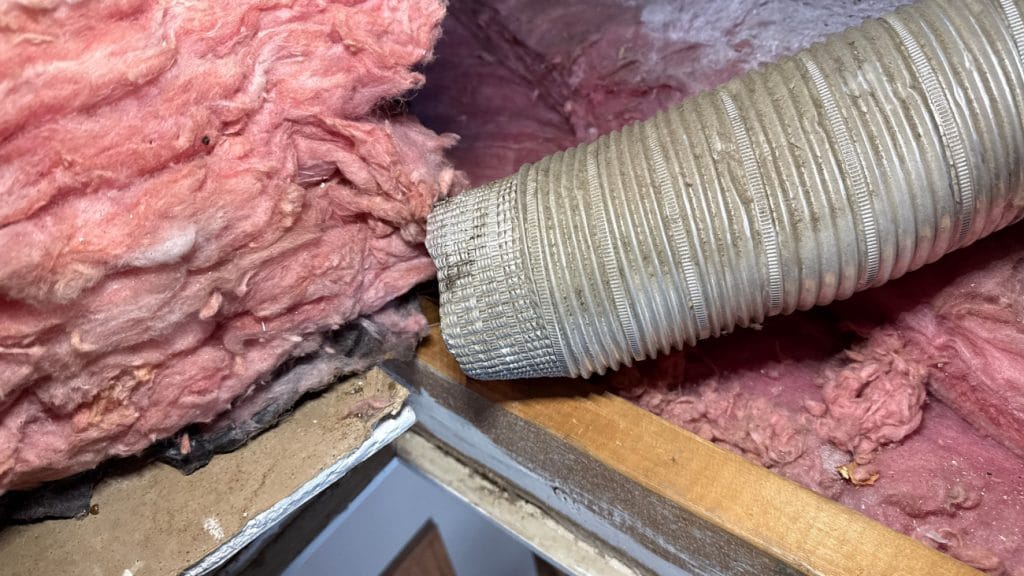
The issue is simple: bathroom exhaust fans that do not vent to the exterior.
Instead of directing moisture outside, these systems discharge warm, humid air directly into the attic. Based on field experience, this condition exists in a roughly 70% of homes, often without the homeowner realizing it. Everything inside the house appears normal: no leaks, no obvious damage, and no immediate cause for concern. Without entering the attic and knowing what to look for, the problem remains hidden.
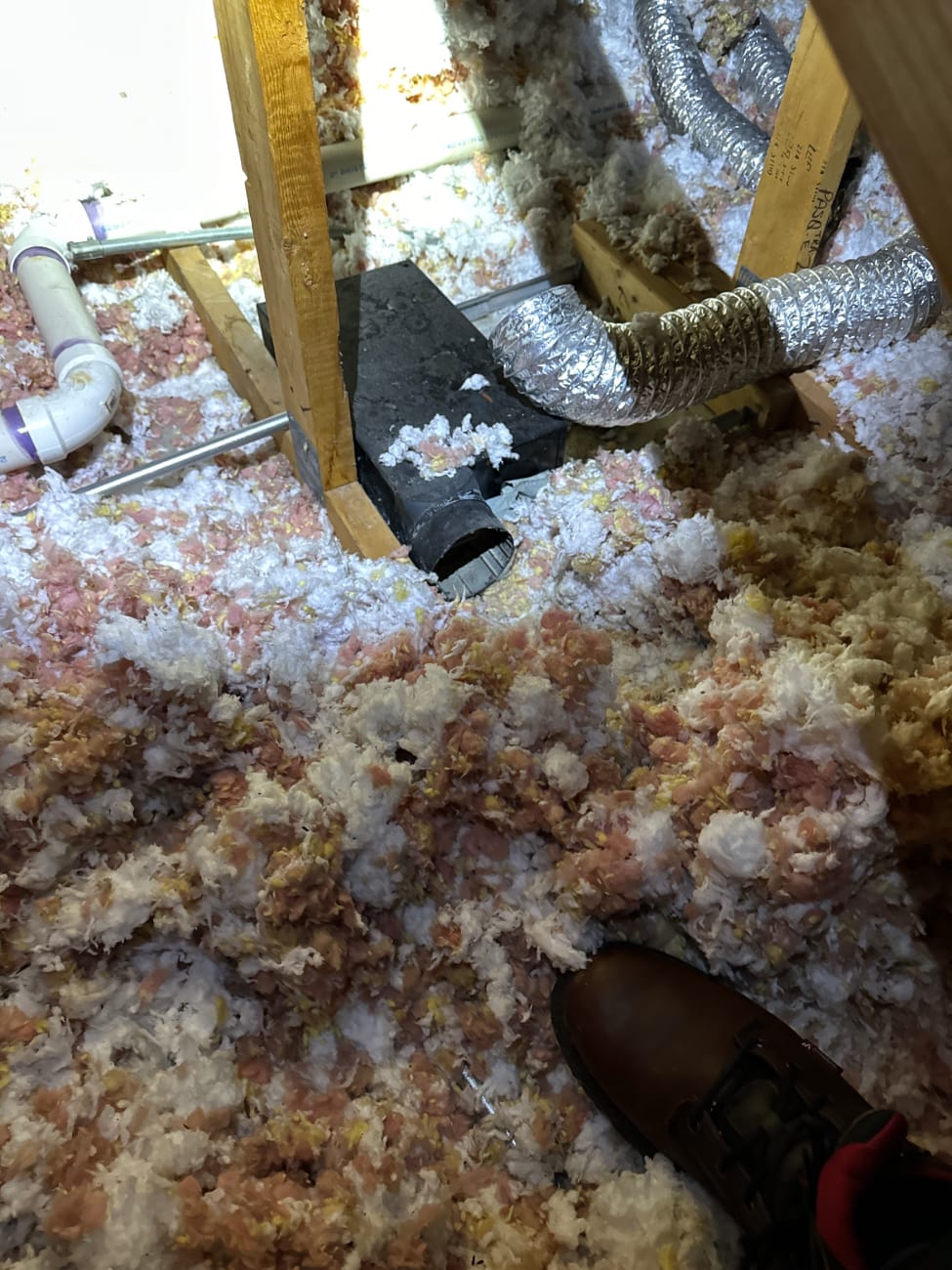
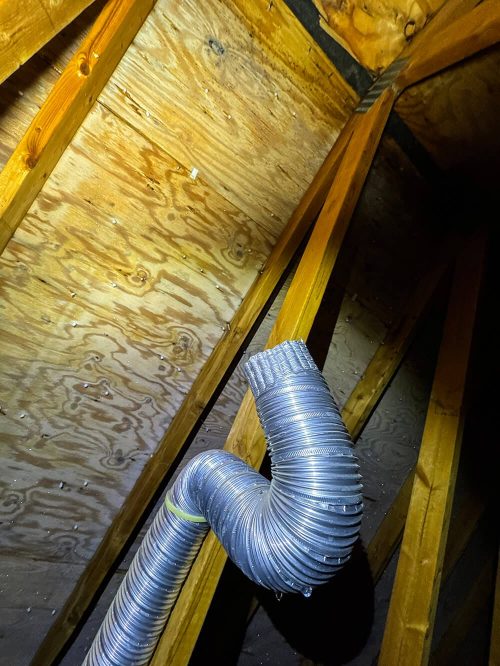
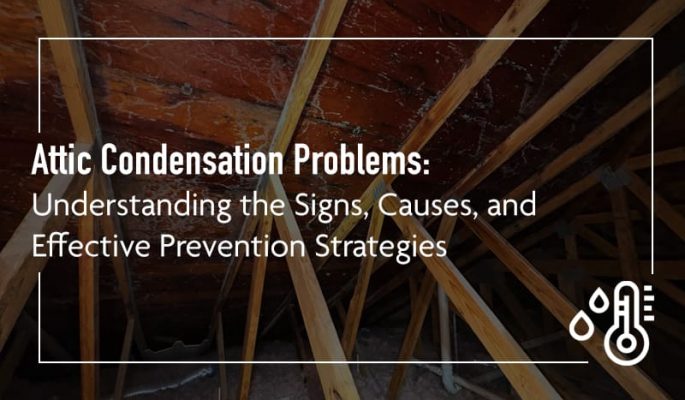
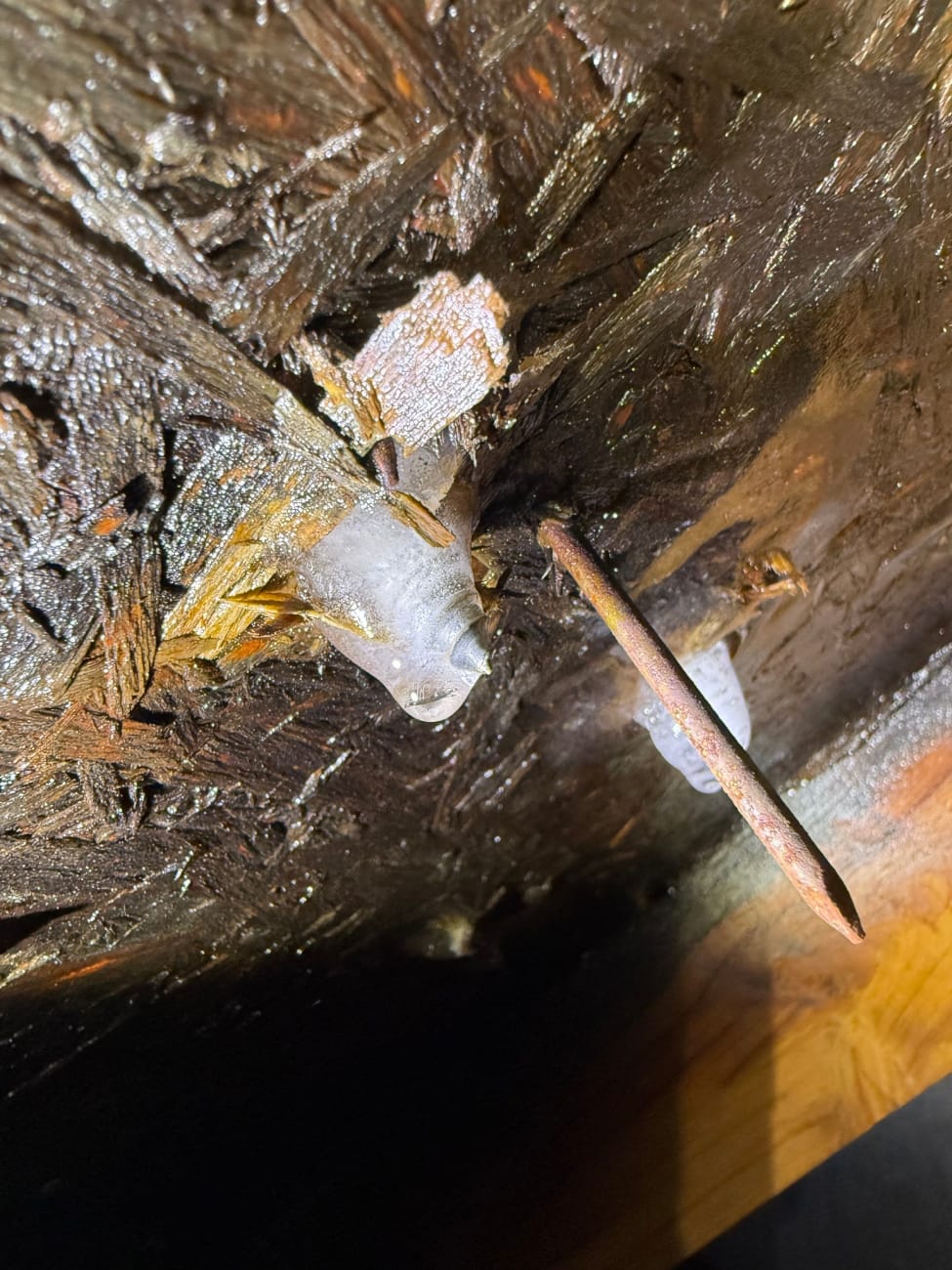
At the time, this did not create immediate problems. However, over years of normal use, the effects accumulate. Every shower releases warm, moisture-laden air. In colder months, that air condenses on cooler attic surfaces, such as roof decking, nails, and fasteners. These cycles of condensation, freezing, and thawing repeat year after year.
The result is not sudden failure, but gradual deterioration.
When moisture is introduced into an attic without proper ventilation, it impacts multiple components simultaneously.
Insulation is often the first to degrade. Fiberglass insulation installed decades ago gradually absorbs moisture, dust, and airborne contaminants. Over time, it compresses and loses effectiveness. In one inspected home, insulation performance had declined to approximately R-14—far below the recommended R-49 to R-60 for this region.
At the same time, structural elements begin to show signs of prolonged exposure. Frost forming on nails during winter is a common indicator. As temperatures rise, that frost melts and drips back into the attic. Roof decking may develop dark staining, which is often an early indicator of repeated moisture exposure—and in some cases, the beginning stages of mold growth.
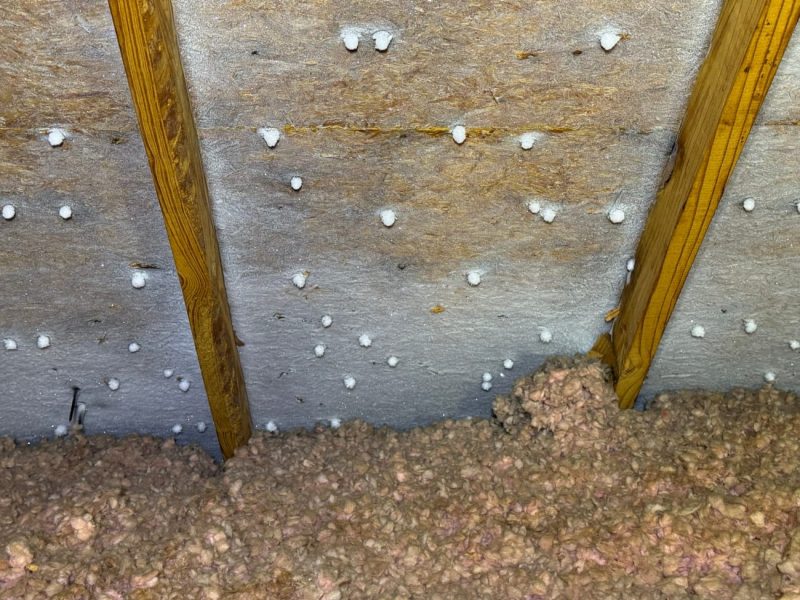
Where moisture persists and airflow is limited, mold can begin to develop on organic materials such as wood sheathing and framing. While not every case progresses to significant contamination, the conditions created by improperly vented exhaust fans increase that risk over time.
In more advanced cases, the attic effectively becomes a closed system. Warm air enters, but insufficient airflow prevents it from escaping. Moisture accumulates rather than dissipates, an environment often described during inspections as an attic that “cannot breathe.”
Kent and Carol’s 1982 home provides a clear example of how issues from a disconnected fan develop over time. The couple had lived there for over 40 years without suspecting a problem. Only after hearing unusual sounds in the attic during winter did they investigate.
The inspection revealed frost on nails, visible moisture, and multiple contributing factors: air leakage from the living space, restricted airflow, and—most critically—two bathroom exhaust fans venting directly into the attic.
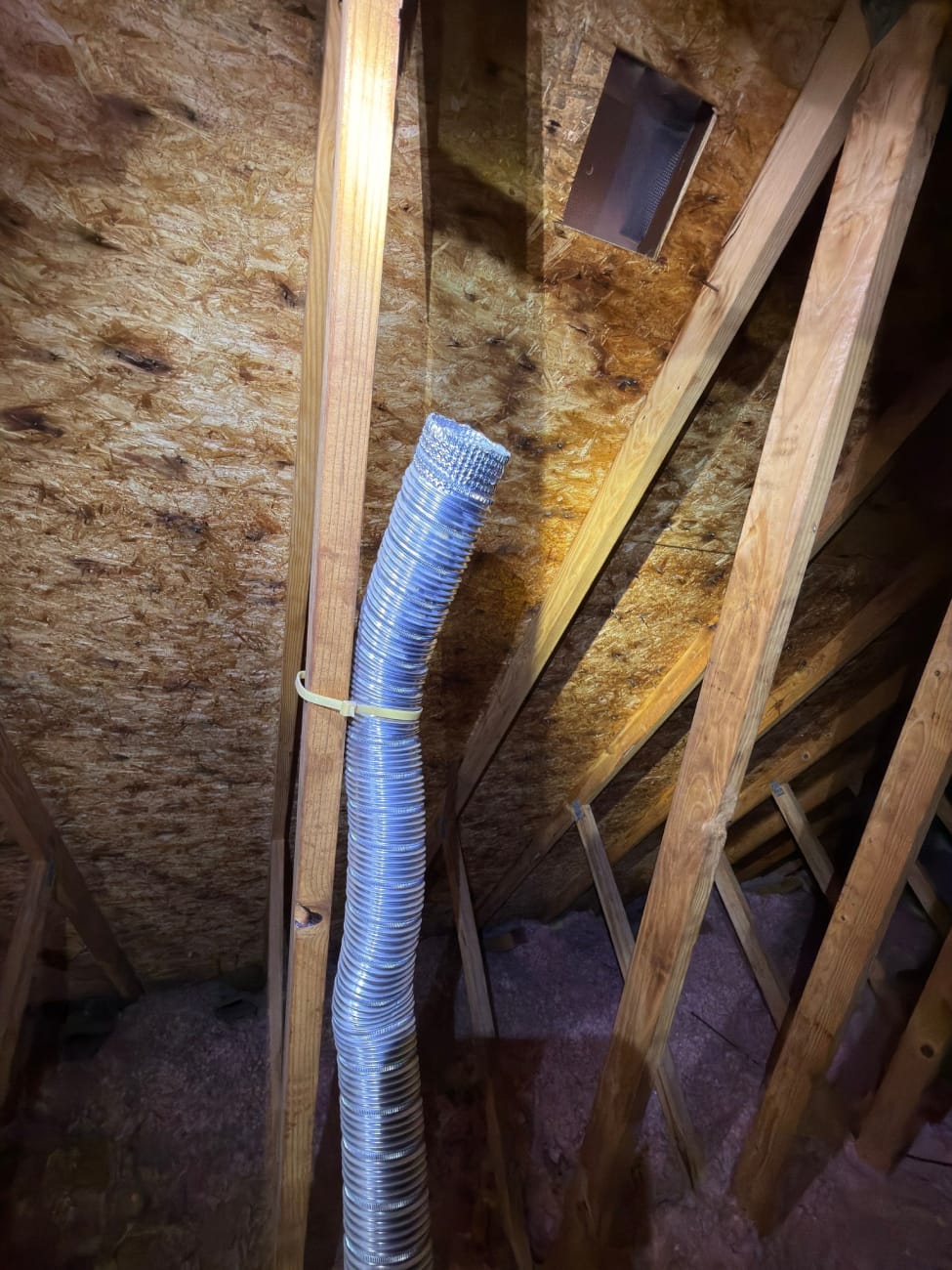
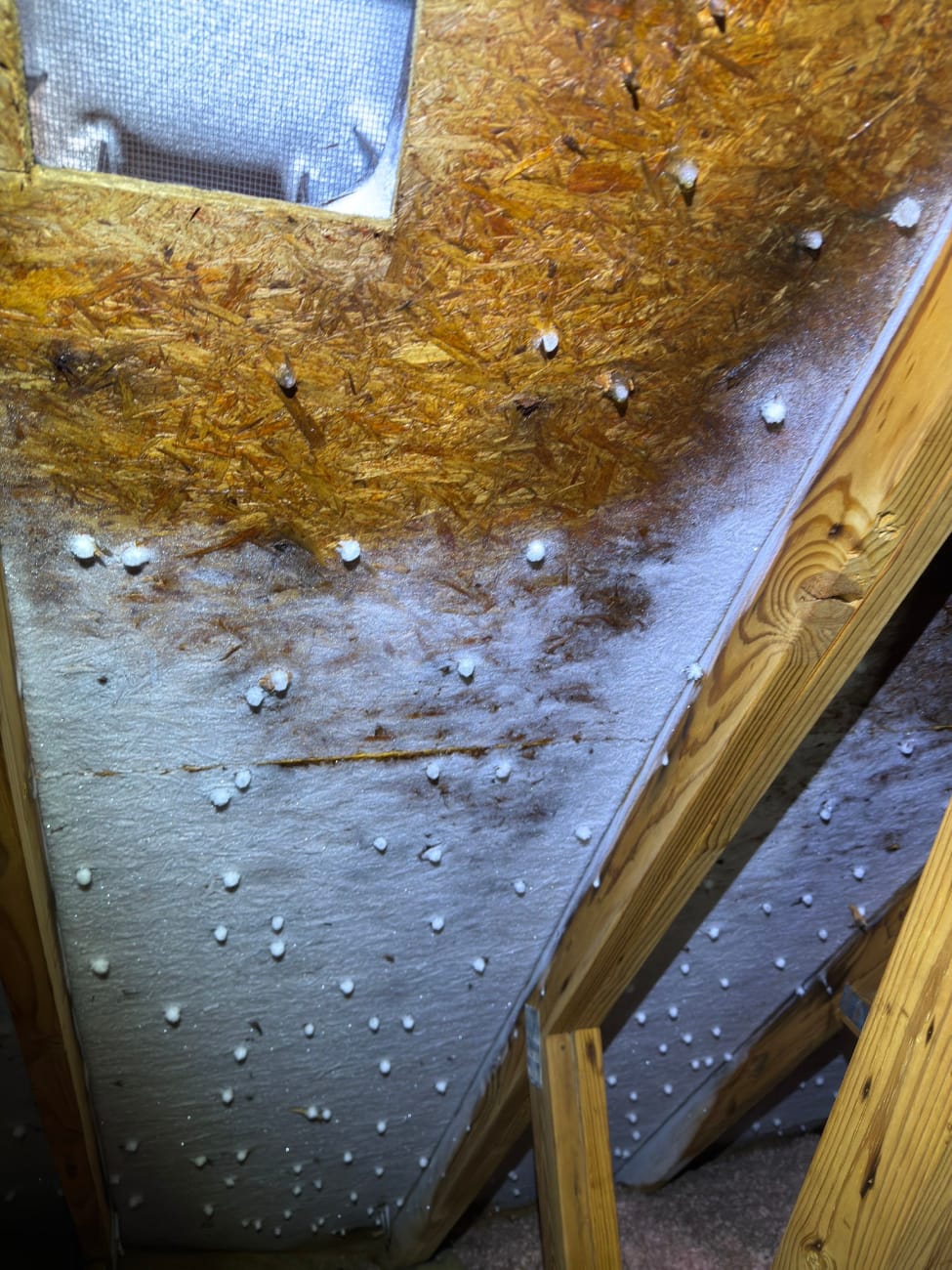
One detail was especially instructive. Several years earlier, during a bathroom remodel, a new exhaust fan was installed but never connected to an exterior vent. Instead of removing moisture, the system had been introducing it into the attic daily.
Over decades, the effects compounded. Insulation had degraded, moisture had accumulated on structural components, and the attic environment had become unstable.
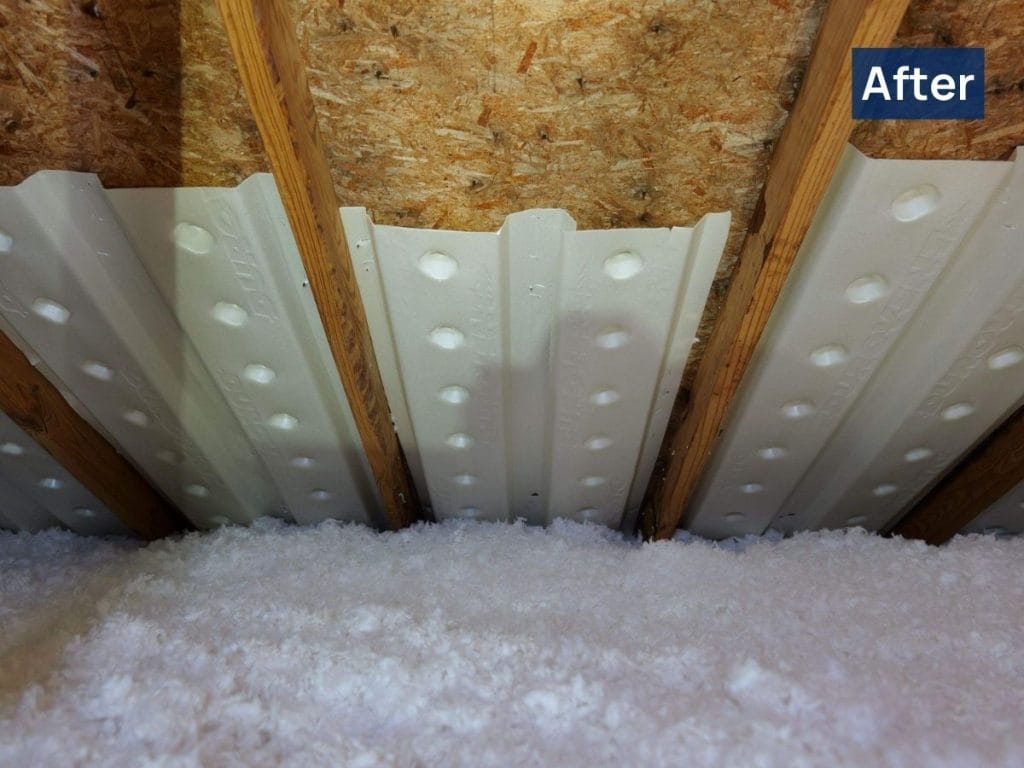
Correcting the issue required a comprehensive approach: reconnecting exhaust vents, restoring ventilation balance, sealing air leaks, and replacing insulation. The total cost reflected the cumulative nature of the problem: not a single failure, but years of gradual deterioration.
“We recently experienced moisture in our attic. I searched several roofing companies and found Holda Construction as one of the most highly rated. I called them and Mariusz, the owner, came out promptly and determined we had an attic ventilation and condensation issue. He thoroughly explained the situation and provided steps on how to resolve the issue. Throughout the repair, his team thoroughly and meticulously completed the work. They were respectful and careful with any interior access to the attic. Mariusz provided pictures and videos, beginning to end, of progress along the way. His communication was very clear of the work to be done, project progress, and final completion. I highly recommend Holda Construction for any roofing, siding or attic ventilation work.”
⭐⭐⭐⭐⭐ Google Review – Kent Deener
To learn more about this project, feel free to read our case study: Strange Sounds From the Attic: Ventilation & Insulation Overhaul of 1982 Chicagoland Home.
In Cary, a homeowner named Brett initially believed a roof replacement was necessary due to age and visible wear. However, a closer evaluation revealed that the underlying issue was not the roof itself.
The attic showed clear signs of moisture accumulation: frost, condensation, and swelling of OSB roof decking. The source was traced to two factors: bathroom exhaust fans venting into the attic and soffit vents that had been painted over, restricting airflow.
Importantly, there was no active roof leak. The moisture originated entirely from within the home.
“Mariusz is wonderful and so detailed… Holda will be my first call for a quote on any future work!”
⭐⭐⭐⭐⭐ Google Review – Brett Engleman
To learn more about this project, feel free to read our case study: The Roof We Refused to Replace: Solving a Hidden Ventilation Crisis in Cary.
A common misconception is that adding insulation will compensate for poor attic performance. In reality, this approach often makes the situation worse.
When insulation has been exposed to long-term moisture, it loses both efficiency and integrity. Adding new insulation on top does not resolve the underlying issue. Instead, it traps existing moisture and contaminants within the system.
I like to use the following comparison: placing new insulation over old, degraded material is like putting clean bedding over bedding you’ve slept in for a week while not showering. The appearance improves, but the soil and odor remains.
Disconnected bathroom vents are not an isolated defect, they are part of a broader pattern found in many homes. Because the effects develop slowly and remain out of sight, it is often overlooked until more noticeable symptoms appear.
The takeaway is not that every home has a problem, but that many homes should not be assumed to be functioning correctly without verification. An attic can appear inactive while still experiencing long-term moisture exposure.
Understanding how ventilation, insulation, and air sealing interact allows homeowners to make informed decisions and avoid costly, misdirected repairs. In many cases, addressing the root cause early can prevent significantly larger expenses later.
For homeowners in Palatine and surrounding communities, especially those in homes built between 1975 and 1995, it is worth asking a simple question:
Has the space above the ceiling ever been properly evaluated—not just visually, but functionally?
If your home was built between the 1970s and 1990s and the attic has never been thoroughly evaluated, it may be worth taking a closer look.
At Holda Construction, we approach roof and attic inspections as a system, not just a quick visual check. We assess ventilation, insulation performance, air leakage, and exhaust routing to understand how everything is working together.
If everything is functioning properly, you’ll have peace of mind. If not, you’ll have clear, practical recommendations, so you can make informed decisions without guesswork.
To schedule an attic evaluation or ask a question about your home, contact our team directly at 847.847.2883 or online. We’ll be happy to help however we can.
Contact us today to discuss your next project. We’ll be happy to help. Because taking care of small problems is how you protect yourself from larger problems down the road.